Make some changes to the world environment
The machine you bought will bring you profits, but it will also indirectly change the world environment and give waste plastics a chance to be utilized.

Make some changes to the world environment
Only about 9% of all plastic ever produced has been recycled. That single statistic from a widely cited study published in Science Advances tells you something uncomfortable: most of what people toss into blue bins doesn’t end up becoming a new product. Plastic recycling is the process of collecting, sorting, cleaning, and reprocessing waste plastic into raw material that can be used again in manufacturing — but the gap between how people think it works and how it actually works is enormous. This article breaks down every stage of the process, explains which plastics genuinely get recycled, and gives you a practical framework to stop wasting effort on wishful recycling.
Strip away the feel-good marketing and here’s the core idea: plastic recycling converts post-consumer or post-industrial plastic waste into secondary raw material — typically pellets or flakes — that manufacturers can feed back into production lines. The output isn’t identical to virgin resin. It’s a downgraded version in most cases, which is why industry insiders often call it downcycling rather than true closed-loop recycling.
A PET water bottle, for example, rarely becomes another water bottle. It more commonly becomes polyester fiber for clothing or carpet backing. An HDPE milk jug might become a drainage pipe or a plastic lumber plank. The material loses some structural integrity each time it’s melted and reformed because the polymer chains shorten under heat stress. That’s a physical reality most recycling campaigns gloss over.
Why does this distinction matter? Because if you understand that recycled plastic has limits, you start making smarter decisions — both as a consumer sorting your bin and as a business evaluating plastic recycling equipment for processing operations. Recycling is genuinely valuable. It reduces landfill volume, cuts greenhouse gas emissions compared to virgin production, and conserves petroleum feedstock. But it’s not a magic eraser for plastic waste. It’s one tool in a larger system.
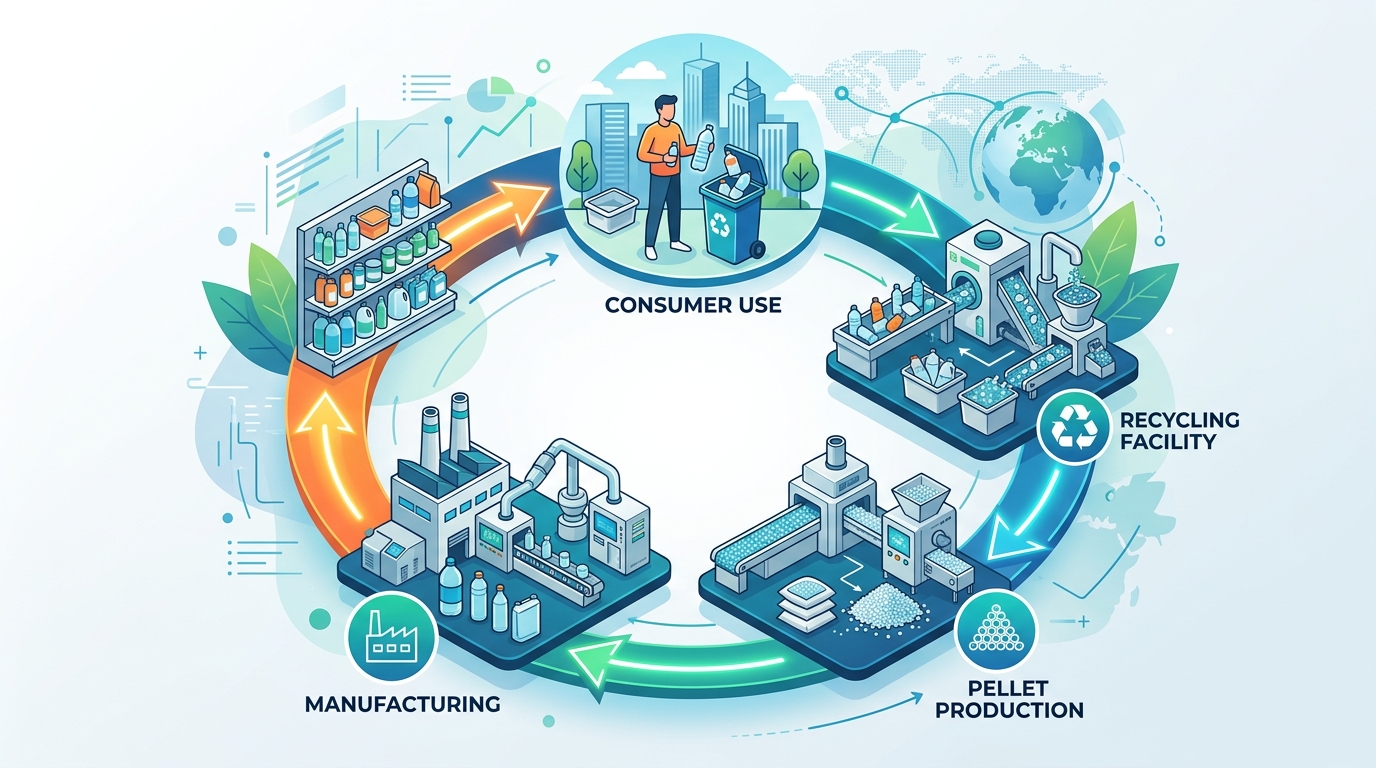
The journey from your recycling bin to a usable plastic pellet involves more steps than most people realize. Here’s what physically happens at each stage.
It starts when you place a container in your curbside bin, drop it at a community recycling center, or deposit it in a public collection point. Haulers pick up these mixed recyclables — plastic, paper, glass, metal, all jumbled together — and transport them to a Material Recovery Facility, commonly called a MRF (pronounced “murf”). Some trucks have internal dividers separating trash from recyclables even when they appear to dump everything into one compartment.
This is where the real work begins. The mixed stream gets dumped onto a tipping floor and loaded onto conveyor belts. Workers first do a manual pre-sort to pull out obvious contaminants — plastic bags that jam equipment, food waste, random non-recyclables like garden hoses or electronics.
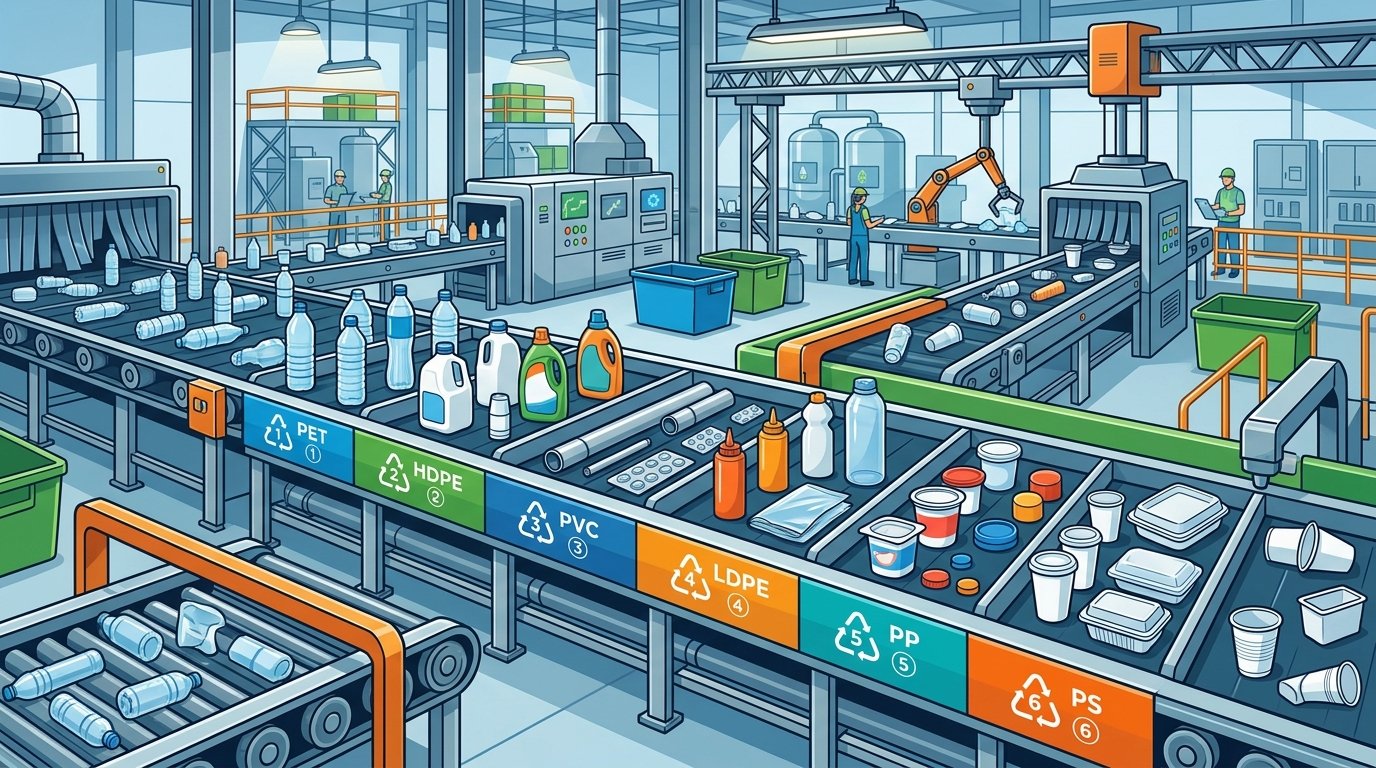
Then automated systems take over. Optical sorters use near-infrared (NIR) sensors to identify different polymer types by how they reflect light. Ballistic separators divide flat items (like film) from rigid containers. Eddy current separators remove aluminum. Magnets pull out ferrous metals. Air classifiers blow lighter materials away from heavier ones. The goal: isolate each material type into clean, separated bales ready for sale to reclaimers.
A well-run MRF can process 30 to 40 tons of material per hour. But here’s the catch — contamination rates at many facilities run between 15% and 25%. That contaminated fraction goes straight to landfill.
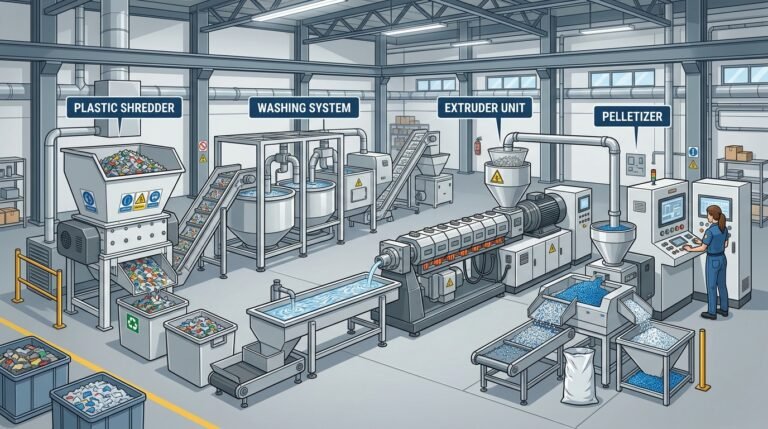
Once sorted by polymer type, the plastic bales go to a reclaimer or reprocessor. The first thing they do is wash everything. Labels, adhesives, food residue, dirt — all of it has to come off. Industrial plastic washing systems use hot water, friction washers, and sometimes caustic soda baths to strip contaminants. This step is critical. Even small amounts of residue can ruin an entire batch of recycled resin.
Clean plastic gets fed into industrial shredder machines that chop it into small, uniform flakes — typically 10 to 20 millimeters. Consistent flake size matters because it determines how evenly the material melts in the next stage. Oversized chunks create cold spots; undersized dust clogs filters.
Even after MRF sorting, some mixed polymers slip through. At the reclaimer level, flakes go through another round of separation. Float-sink tanks exploit density differences — PET sinks in water while PP floats, for instance. Additional NIR sorting catches remaining cross-contamination. Color sorting separates clear flakes from colored ones, since clear material commands a higher price.
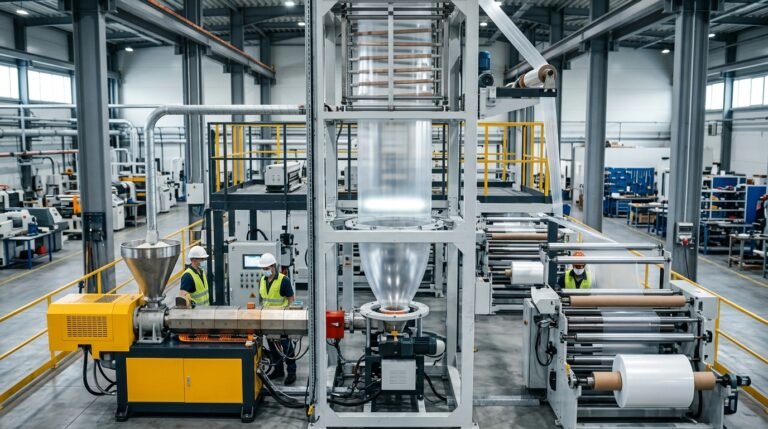
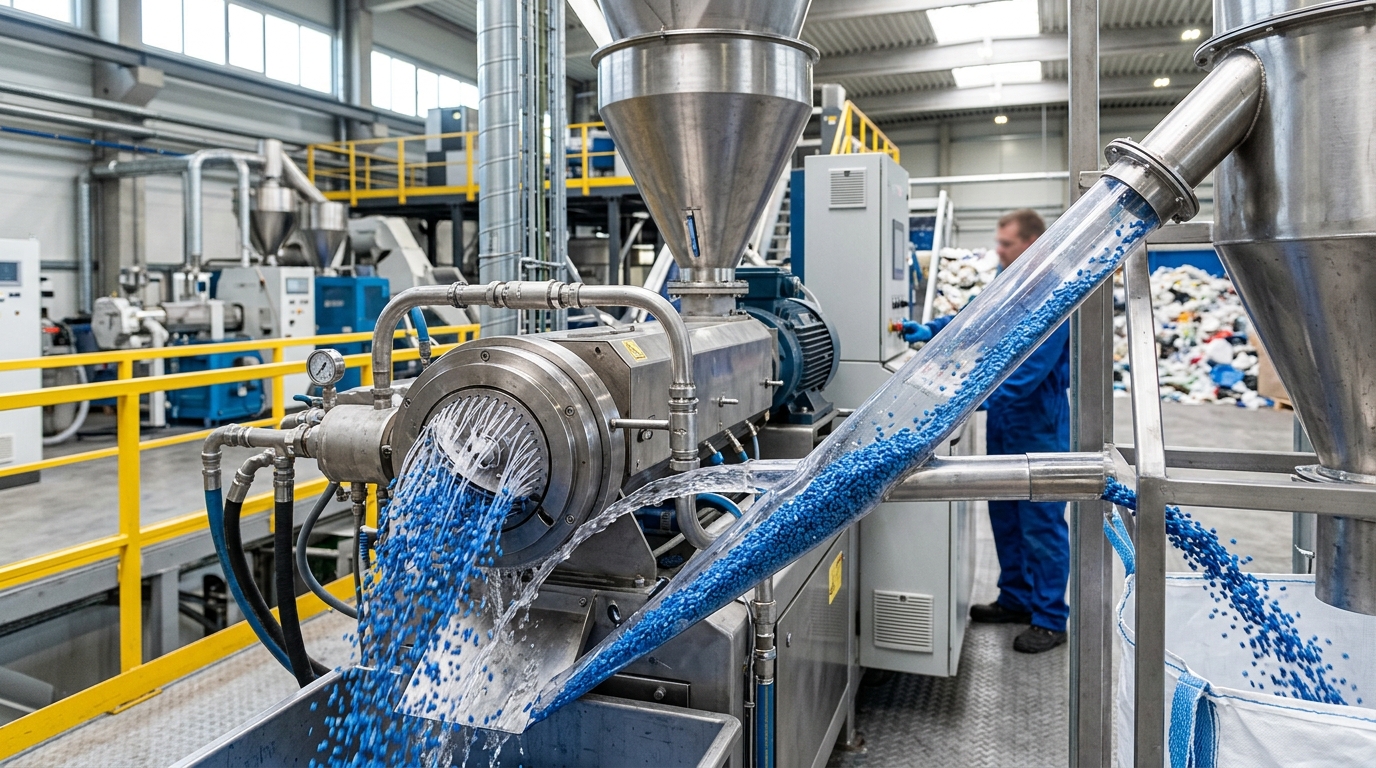
The sorted, cleaned flakes enter an extruder — a heated barrel with a rotating screw that melts the plastic into a uniform molten mass. This melt gets pushed through a die, cooled (usually by water bath or air), and cut into small cylindrical pellets. These pellets, often called “regrind” or “recycled resin,” are the finished product that manufacturers buy. A complete plastic pelletizing machine setup typically processes between 200 and 2,000 kilograms per hour depending on the configuration.
The pellets get sold to product manufacturers who blend them with virgin resin (or use them standalone for lower-spec applications) and injection-mold, blow-mold, or extrude them into new products. Bottles, containers, pipes, automotive parts, packaging film, furniture — the applications are broad, though the quality tier depends heavily on how clean and consistent the recycled input is.
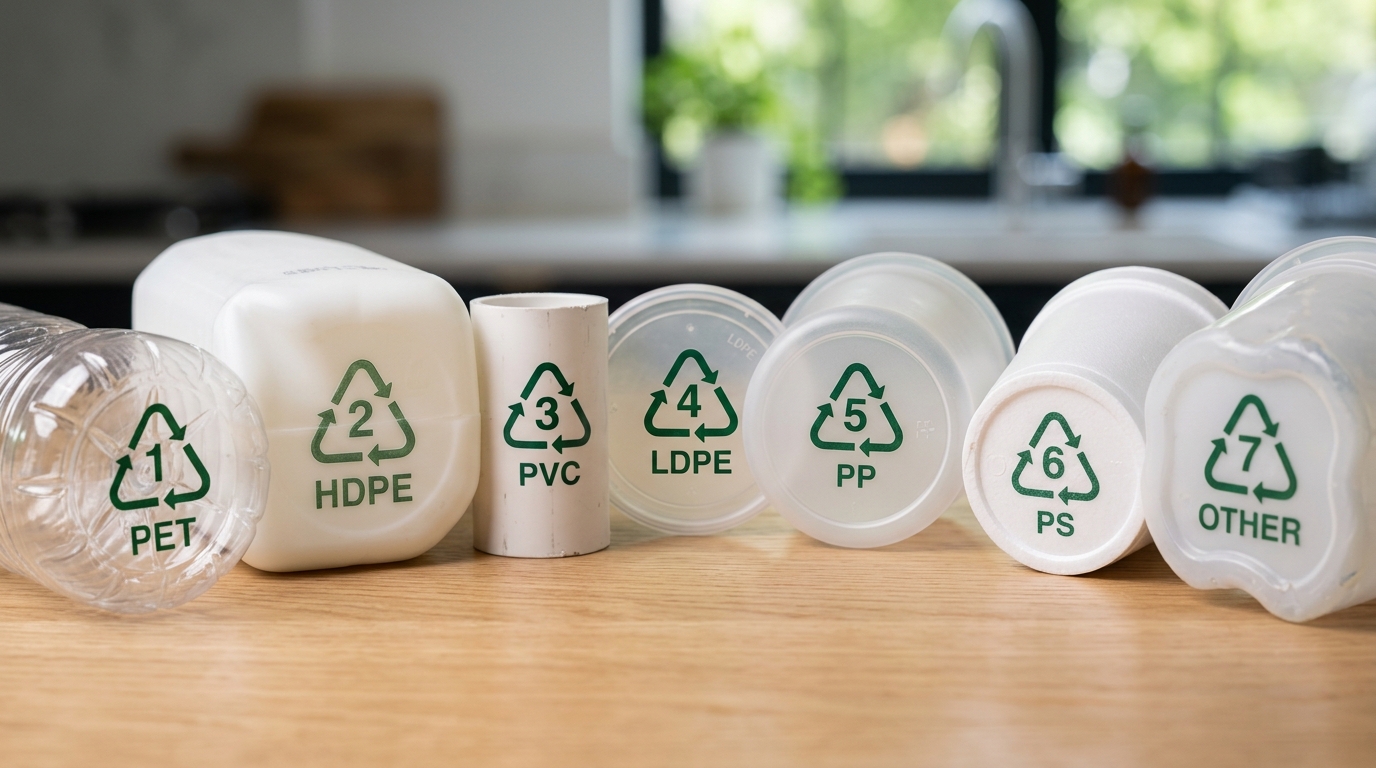
Those little numbers stamped inside the triangular arrow symbol on plastic products? They’re resin identification codes, not recycling symbols. This is one of the most widespread and damaging misconceptions in consumer recycling. The code tells you what type of polymer the item is made from. It says nothing about whether your local program accepts it.
| Code | Polymer | Common Products | Widely Recycled? |
|---|---|---|---|
| #1 PET | Polyethylene Terephthalate | Water bottles, soda bottles, food clamshells | Yes — highest demand |
| #2 HDPE | High-Density Polyethylene | Milk jugs, detergent bottles, shampoo bottles | Yes — strong market |
| #3 PVC | Polyvinyl Chloride | Pipes, window frames, blister packs | Rarely — contaminates other streams |
| #4 LDPE | Low-Density Polyethylene | Grocery bags, squeeze bottles, film wrap | Store drop-off only |
| #5 PP | Polypropylene | Yogurt cups, bottle caps, takeout containers | Growing acceptance |
| #6 PS | Polystyrene | Foam cups, takeout boxes, packing peanuts | Almost never |
| #7 Other | Mixed/multilayer/bioplastics | Baby bottles, large water jugs, some food packaging | Almost never |
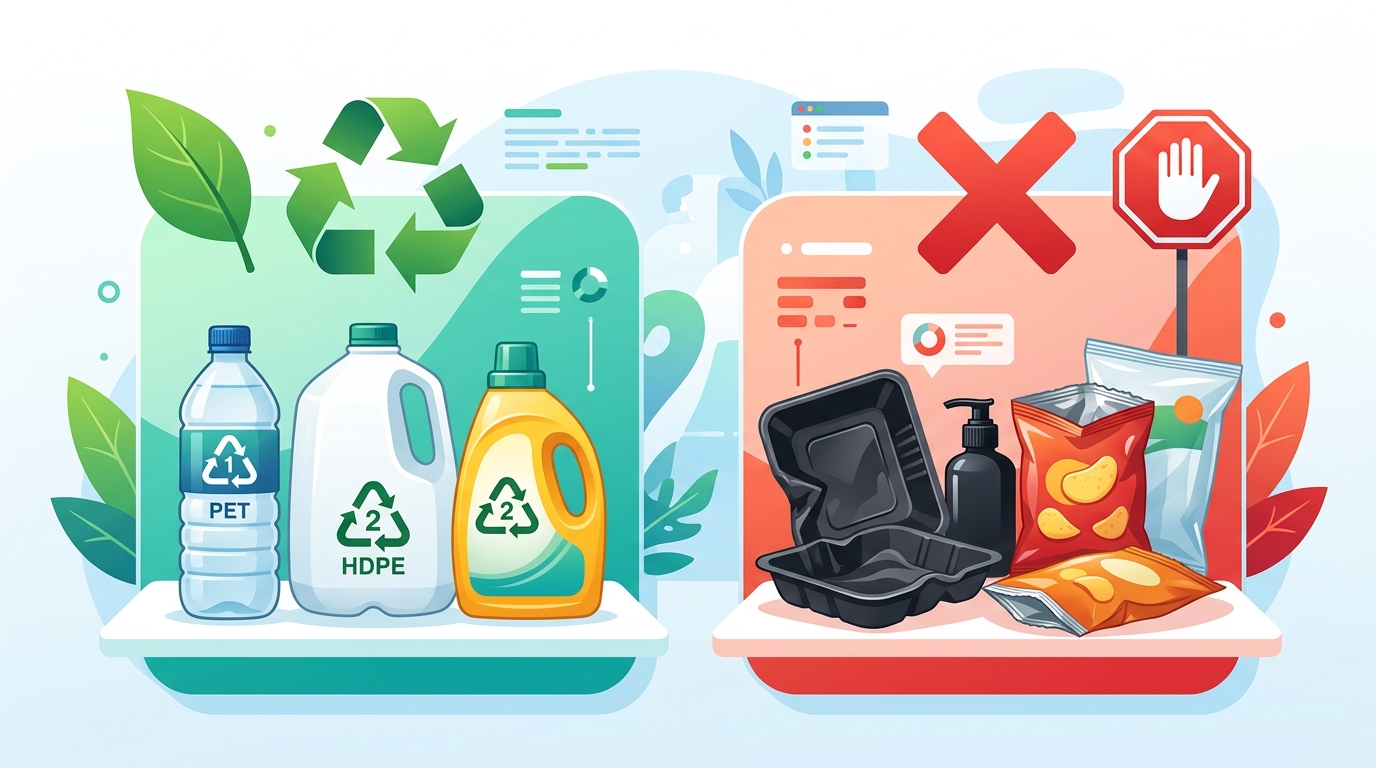
The key takeaway: #1 PET and #2 HDPE are the only plastics with consistently strong recycling markets in most regions. Number 5 PP is gaining ground — some major consumer goods companies are investing in PP recycling infrastructure — but it’s still hit-or-miss depending on where you live. Everything else is either economically unviable to recycle at scale or actively harmful to the recycling stream when mixed in.
PVC is a particularly problematic contaminant. Even a small amount of PVC mixed into a PET batch can ruin the entire load because PVC degrades at PET processing temperatures and releases hydrochloric acid. One misidentified bottle can compromise tons of otherwise recyclable material.
Here’s the honest answer that recycling campaigns rarely give you: being technically recyclable and being practically recycled are two completely different things.
Almost any thermoplastic can be melted and reformed. The question is whether the economics support it. Recycling only happens when someone is willing to buy the output material at a price that covers collection, sorting, cleaning, and reprocessing costs. When virgin resin is cheap (which it often is, since it’s derived from subsidized fossil fuels), recycled resin struggles to compete.
If you want to understand the economics behind what makes recycling viable or not, the breakdown of recycled plastic market value gives a more detailed picture.
Almost all plastic recycling happening today — roughly 99% of it — is mechanical. But chemical recycling (sometimes called “advanced recycling”) gets an outsized share of media attention and industry investment. Understanding the difference matters because these two approaches have very different capabilities, limitations, and environmental profiles.
This is the sort-wash-shred-melt-pelletize process described earlier. It’s proven, commercially scaled, and relatively energy-efficient. The downsides: polymer degradation limits how many times material can cycle through (typically 2 to 3 times before quality drops unacceptably), it requires clean and well-sorted input, and it can’t handle mixed or contaminated plastics effectively.
Mechanical recycling also releases microplastics. A study published in the Journal of Hazardous Materials Advances found that even facilities with advanced filtration systems discharge microplastics into wastewater. It’s a real environmental concern that the industry is working to address but hasn’t solved.
Chemical recycling breaks plastic down at the molecular level — back to monomers or into hydrocarbon feedstock — using processes like pyrolysis (thermal decomposition without oxygen), gasification, or depolymerization. The promise: it can handle mixed, contaminated, and multi-layer plastics that mechanical recycling can’t touch, and the output can theoretically match virgin-quality resin.
The reality is more complicated. Most chemical recycling facilities operate at pilot or demonstration scale. Energy consumption is significantly higher than mechanical recycling. Pyrolysis in particular has drawn criticism because a large fraction of the output is fuel oil that gets burned — which is technically “energy recovery,” not recycling. The Wikipedia overview of plastic recycling notes that feedstock recycling involves substantially higher energy and capital costs than mechanical methods.
My honest assessment: chemical recycling will play a role in handling waste streams that mechanical recycling can’t process. But it’s not a silver bullet, and some industry players are using “advanced recycling” branding to greenwash what is essentially plastic-to-fuel incineration. Watch what actually comes out of the process, not just what the press release says.
Wishcycling — tossing something in the recycling bin hoping it’s recyclable — is one of the biggest problems recycling facilities face. It sounds harmless. It’s not. A single greasy pizza box or plastic bag can contaminate an entire bale of otherwise clean recyclables, sending the whole batch to landfill.
Here’s a practical checklist that actually works:
The 5-Point Recycling Check
1. Is it a rigid plastic container marked #1, #2, or #5? If yes, proceed.
2. Is it empty? Scrape or pour out remaining contents.
3. Is it reasonably clean? A quick rinse is enough — it doesn’t need to be spotless.
4. Are caps and lids on? Modern MRFs can handle them. Loose caps fall through screens and get lost.
5. Is it loose (not bagged)? Never bag your recyclables in a plastic bag. MRF workers can’t open bags fast enough on the line, and bags jam sorting equipment.
Plastic bags and film in curbside bins. This is the number one contaminant at MRFs across North America. Film wraps around sorting equipment shafts and shuts down the line. If your community doesn’t specifically accept film, return it to store drop-off collection points instead.
Food-contaminated containers. A peanut butter jar with an inch of product still inside? That’s trash, not recycling. You don’t need to scrub it with soap, but you do need to scrape it out and rinse it.
Non-container plastics. Toys, hangers, laundry baskets, garden pots — even if they’re stamped with a resin code, most curbside programs don’t accept non-container rigid plastics. The sorting infrastructure is designed for bottles, jugs, and tubs.
“Tanglers.” Garden hoses, extension cords, rope, string lights. These wrap around MRF machinery and cause expensive shutdowns. They’re the bane of every facility operator’s existence.
When in doubt, check your local municipality’s accepted materials list. The Association of Plastic Recyclers also offers a helpful tool called RecycleCheck where you can enter your zip code and get specific guidance.
Most plastics can go through mechanical recycling 2 to 3 times before the polymer chains degrade too much for the material to be useful. PET holds up slightly better than other polymers. After that, the material typically gets downcycled into lower-grade products like fiber fill or construction materials. For a deeper dive into these limits, see this analysis of plastic recycling limits.
Globally, the figure hovers around 9% of all plastic ever produced. Current annual recycling rates vary by country — some European nations achieve 30-40% for plastic packaging specifically, while the U.S. sits closer to 5-6% for total plastic waste. The number improves when you look only at PET bottles, where collection rates in deposit-return states can exceed 70%.
Yes, when processed correctly. The FDA and EFSA both have approval processes for recycled plastic in food-contact applications. Recycled PET (rPET) is the most commonly approved material. The key requirement is a “super-clean” recycling process that removes contaminants to levels below safety thresholds. Not all recycled plastic meets this standard — only material from certified food-grade recycling processes qualifies.
Three main destinations: landfill (the most common outcome globally), incineration with energy recovery (common in Europe and Japan, where waste-to-energy plants generate electricity), or leakage into the environment as pollution. A small but growing fraction goes to chemical recycling facilities, though capacity remains limited.
Yes, but not as much as you might think. A quick rinse to remove most food residue is sufficient. You’re not trying to make it dishwasher-clean — you’re trying to prevent the material from contaminating other recyclables during the days or weeks before it gets processed. Heavily soiled items that can’t be reasonably cleaned should go in the trash.
Because recycling is a market-driven system, not a universal standard. What your city accepts depends on which reclaimers operate nearby, what contracts your MRF has in place, and what sorting technology is installed. A city with a newer MRF equipped with advanced optical sorters can accept a wider range of plastics than one running older equipment. This is why checking your local guidelines is non-negotiable.
The recycling system doesn’t fail because the technology is bad. It fails because the input is bad. Contamination from well-meaning but misinformed consumers is the single largest operational challenge at MRFs across the world. When you understand which plastics have real end markets, how sorting actually works, and why that plastic bag jams the machinery, you stop being part of the problem.
Three things you can do right now that have outsized impact:
Plastic recycling isn’t perfect. It’s not going to solve the plastic waste crisis on its own — reduction and reuse sit higher on the waste hierarchy for good reason. But done correctly, with clean material going into well-equipped facilities running efficient recycling machinery, it genuinely diverts millions of tons of waste from landfills and displaces virgin resin production. That matters. Your part in the process — sorting correctly, avoiding contamination, knowing what’s actually accepted — is where it all starts.