Nehmen Sie einige Änderungen an der Weltumgebung vor
Die von Ihnen gekaufte Maschine bringt Ihnen nicht nur Gewinne, sondern verändert auch indirekt die Umwelt und gibt Kunststoffabfällen eine Chance, verwertet zu werden.

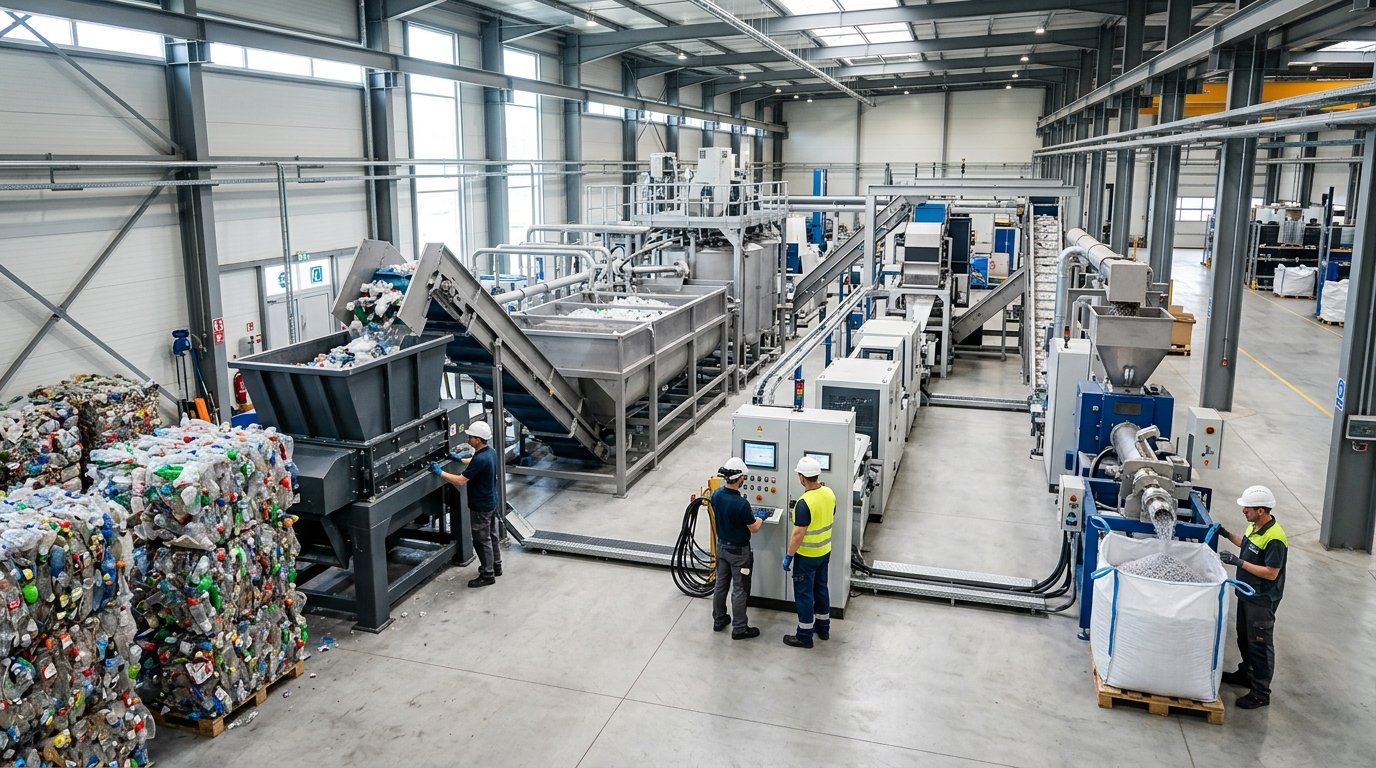
Der weltweite Markt für Kunststoffrecyclingmaschinen übertraf $380 Milliarden im Jahr 2023 und wird laut Grand View Research bis 2030 mit einer CAGR von über 7% wachsen - doch die Wahl des richtigen Kunststoff-Recycling-Maschine manufacturer ist nach wie vor eine der folgenreichsten Entscheidungen, die ein Recyclingbetrieb treffen kann. Der falsche Lieferant kann Verluste in sechsstelliger Höhe durch Ausfallzeiten, minderwertige Pelletqualität und Wartungsalpträume bedeuten, die Ihre Gewinnspannen über Jahre hinweg aushöhlen. Dieser Leitfaden vergleicht die führenden Hersteller in Bezug auf Durchsatzkapazität, Automatisierungstechnik, Preisgestaltung und Kundendienst, damit Sie Angebote mit Zuversicht bewerten und in Anlagen investieren können, die sich tatsächlich rentieren.
Nicht jedes Unternehmen, das seinen Namen auf eine Granulieranlage setzt, verdient Ihr Kapital. Die Kluft zwischen einer zuverlässigen Hersteller von Kunststoff-Recycling-Maschinen und ein mittelmäßiges Gerät zeigt sich erst Monate nach der Installation - durch ungeplante Ausfallzeiten, uneinheitliche Pelletqualität und unbeantwortete Serviceanfragen. Bevor Sie bestimmte Marken vergleichen, brauchen Sie einen klaren Rahmen für die Bewertung.
Der Anschaffungspreis einer Maschine macht etwa 30-40% der Gesamtbetriebskosten über zehn Jahre aus. Installation, Energieverbrauch, Wartung und Ausfallzeiten machen den Rest aus.
Wenn Sie genauer wissen möchten, wie führende Unternehmen bei diesen Kriterien abschneiden, finden Sie in unserem Vergleich der besten Hersteller von Kunststoffrecyclingmaschinen schlüsselt die realen Leistungsdaten auf. In den folgenden Abschnitten wird genau dieser Rahmen auf bestimmte Marken in Europa, Asien und darüber hinaus angewendet.
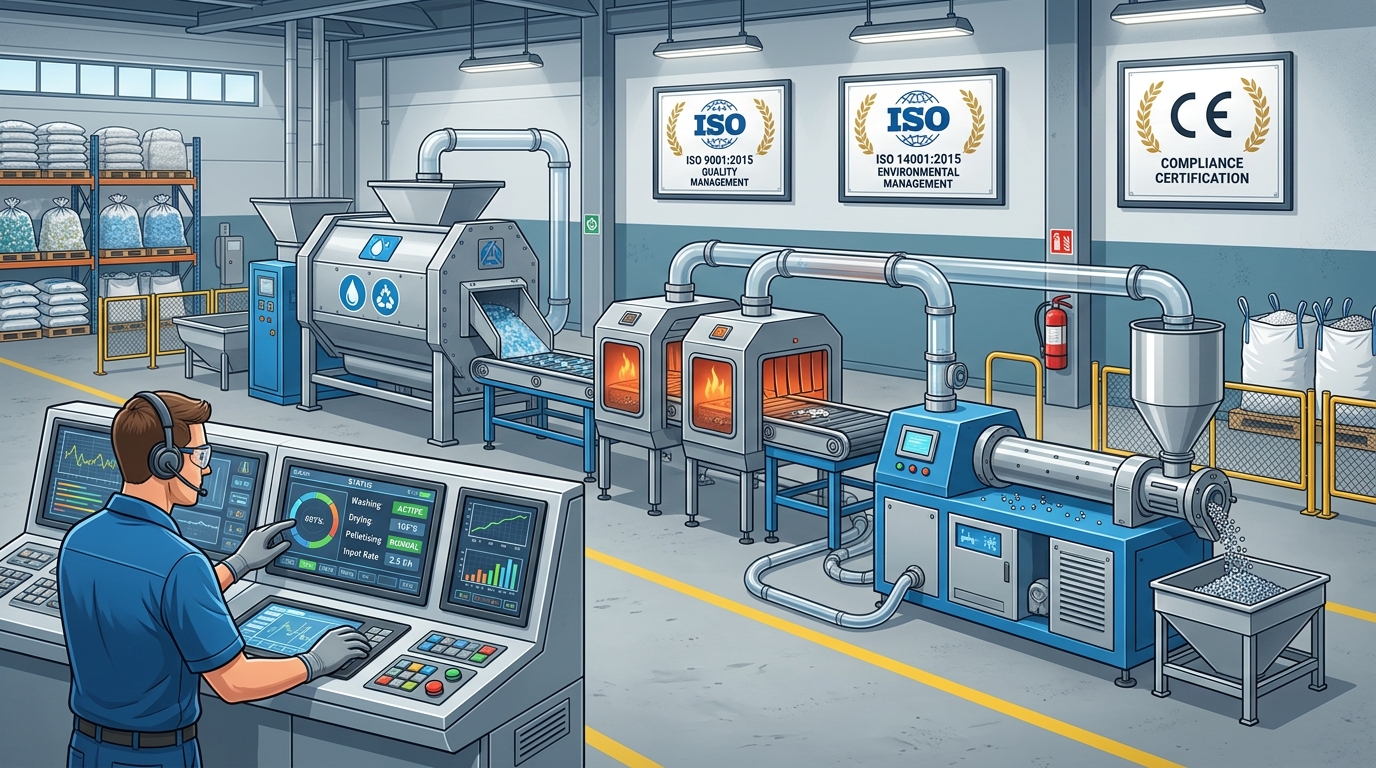
Der Weltmarkt wird von einer Handvoll Unternehmen beherrscht, deren Maschinen jährlich Millionen von Tonnen an Post-Consumer- und Post-Industrial-Kunststoffen verarbeiten. Hier ist ein kurzer Überblick über die wichtigsten Namen.
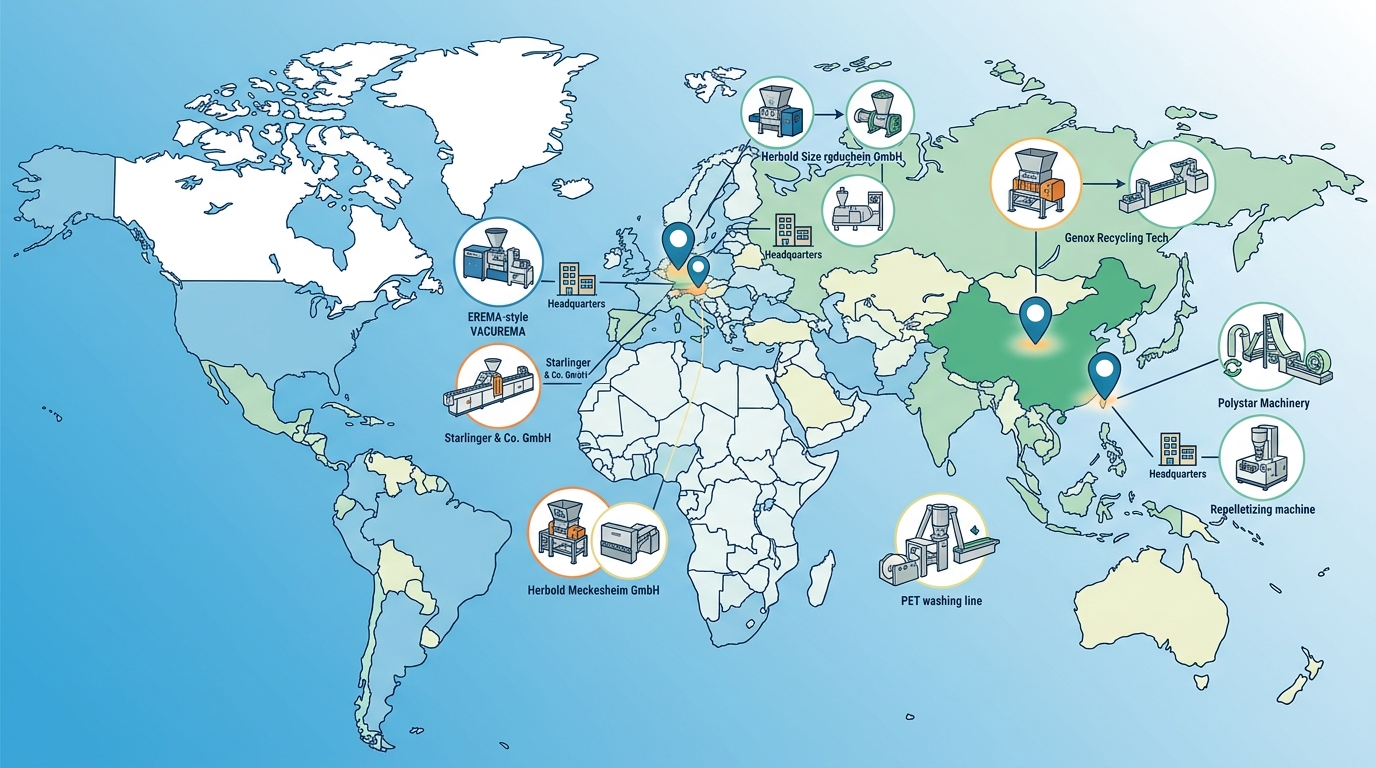
EREMA (Österreich) bleibt die Benchmark. Mit mehr als 7.500 installierten Systemen in 108 Ländern liefert die INTAREMA® TVEplus®-Linie eine Granulatqualität, die mit der von Frischfasern konkurriert. Das Unternehmen dominiert das Bottle-to-Bottle-PET-Recycling und beliefert große Markenartikler wie Coca-Cola und Nestlé.
Starlinger (Österreich) ist auf das Recycling von gewebtem Polypropylen und PET spezialisiert. Die recoSTAR dynamic-Serie bewältigt einen Durchsatz von bis zu 3.000 kg/h und ist in Südostasien und Lateinamerika für die Produktion von rPET in Lebensmittelqualität weit verbreitet.
Herbold Meckesheim (Deutschland) zeichnet sich durch Wasch- und Zerkleinerungssysteme aus. Die Technologie des Kunststoffverdichters wird vor allem in europäischen kommunalen Verwertungsanlagen für starres HDPE und gemischte Polyolefinströme eingesetzt.
Genox (China) und Polystar (Taiwan) repräsentieren die aufstrebende Kraft der asiatischen Technik. Genox bietet Hochleistungs-Zerkleinerungsmaschinen mit Siemens-gesteuerter Automatisierung zu 30-50% niedrigeren Kapitalkosten als europäische Pendants. Die Repro-Flex-Maschine von Polystar integriert Schneidverdichter und Extruder in einer einzigen Einheit - ideal für Folienrecycler, die eine kompakte Stellfläche benötigen.
Welcher Hersteller von Kunststoffrecyclingmaschinen für Ihren Betrieb geeignet ist, hängt weniger vom Prestige der Marke ab als vielmehr von der Art des Kunststoffs, dem Verschmutzungsgrad und der angestrebten Qualität der Produktion.
Einen ausführlicheren Vergleich, der weitere chinesische Anbieter einbezieht, finden Sie in unserem Ausführlicher Hersteller-Vergleichsleitfaden. In den folgenden Abschnitten werden die europäischen und asiatischen Marktteilnehmer einzeln aufgeführt, so dass Sie Technologieführerschaft und Kosteneffizienz anhand realer Zahlen abwägen können.
Europa legt nicht nur Umweltvorschriften fest - es baut auch die Maschinen, die die Einhaltung der Vorschriften rentabel machen. Wenn Recycler lebensmitteltaugliches rPET oder geschlossene Kreislaufsysteme von Flasche zu Flasche benötigen, wenden sie sich überwiegend an europäische Technik. Der Grund dafür liegt auf der Hand: Keine andere Region bietet eine vergleichbare Kombination aus hochentwickelter Automatisierungstechnik, Energieeffizienz und regulierungsorientierter Forschung und Entwicklung wie Europa.
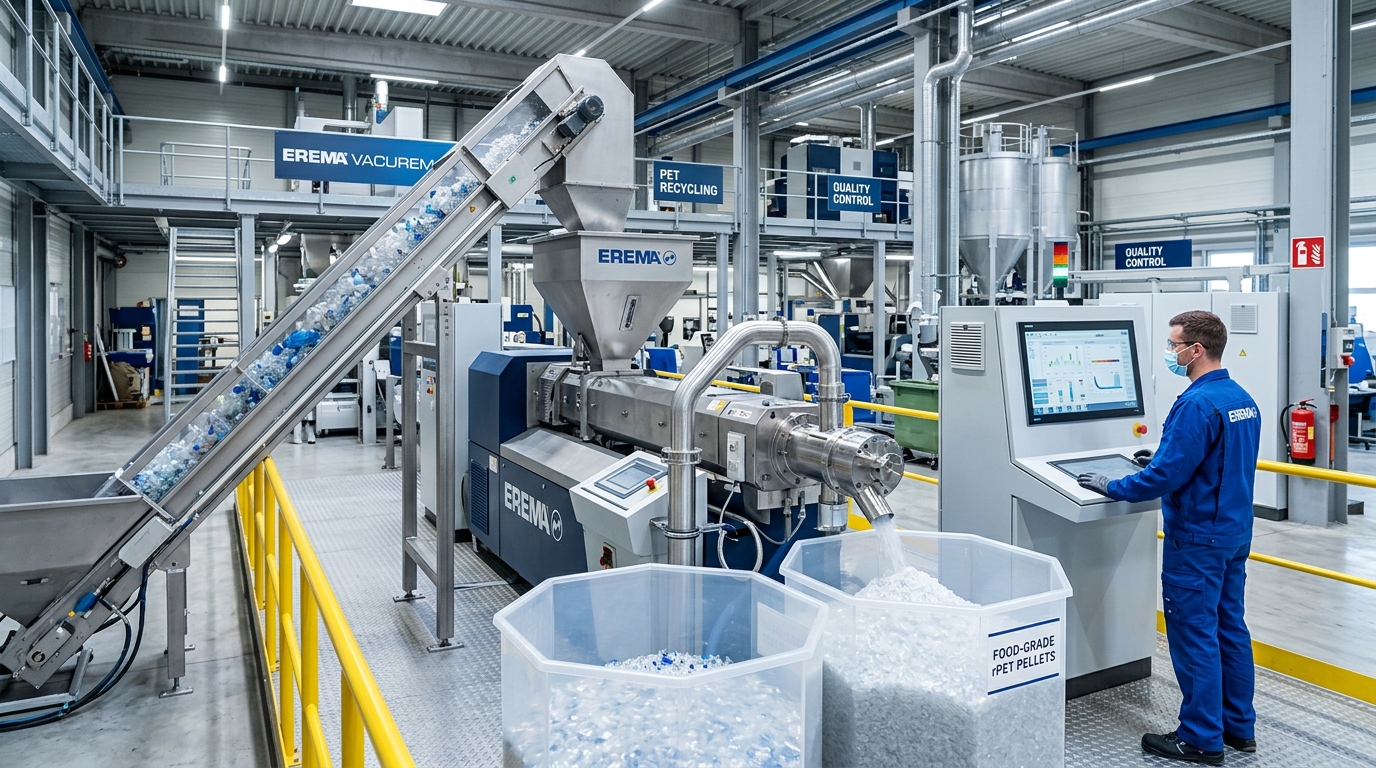
Das österreichische Unternehmen EREMA beherrscht etwa 40% des Weltmarktes für Kunststoffrecycling-Extrusionssysteme. Die VACUREMA® Technologie produziert FDA- und EFSA-zugelassene rPET-Granulate mit Lebensmittelkontakt und verarbeitet bis zu 6 Tonnen pro Stunde auf einer einzigen Anlage. Das patentierte Gegenstromfiltrationssystem von EREMA senkt den Energieverbrauch um bis zu 15% im Vergleich zu herkömmlichen Konstruktionen - ein entscheidender Vorteil, wenn 30-40% der Betriebskosten auf Strom entfallen.
Starlinger, ein weiteres österreichisches Unternehmen, dominiert mit seiner recoSTAR-Serie das Recycling von gewebten Polypropylensäcken und PET-Flaschen. Ihre iV+-Technologie erreicht eine intrinsische Viskosität von über 0,80 dl/g und erfüllt damit die strengsten Normen für Lebensmittelqualität. Das deutsche Unternehmen Herbold Meckesheim ist auf Anlagen zum Waschen, Zerkleinern und Trennen spezialisiert - die kritischen vorgelagerten Schritte, die die endgültige Granulatqualität bestimmen. Die Plastcompactor-Baureihe von Herbold Meckesheim verarbeitet verunreinigte Post-Consumer-Folien, die viele Mitbewerber einfach nicht effektiv verarbeiten können.
Europäische Maschinen kosten in der Regel 30-60% mehr als asiatische Alternativen, aber die Gesamtbetriebskosten über einen Lebenszyklus von 10 Jahren sind aufgrund des geringeren Energieverbrauchs, der geringeren Ausfallzeiten und der höheren Produktionsreinheit oft günstiger als die europäische Option.
Für Käufer, die beurteilen wollen, wie europäische Technologie im Vergleich zu Herstellern aus anderen Regionen abschneidet, bietet unser Vergleich der führenden Hersteller von Kunststoffrecyclingmaschinen bietet eine detaillierte Seite-zu-Seite-Aufschlüsselung. Jeder der oben aufgeführten europäischen Hersteller von Kunststoffrecyclingmaschinen hat sich seinen Ruf durch jahrzehntelange, iterative Entwicklungsarbeit erworben - nicht durch Marketing allein.
Asien hat die Wirtschaftlichkeit von Kunststoffrecyclinganlagen neu gestaltet. Vor einem Jahrzehnt akzeptierten die Käufer einen starken Kompromiss: ein niedrigerer Preis bedeutete eine geringere Qualität. Diese Kluft hat sich drastisch verringert. Heute liefern mehrere asiatische Unternehmen Durchsatzraten von 500-2.000 kg/h auf Granulier- und Waschanlagen - Zahlen, die mit europäischen Systemen der Mittelklasse konkurrieren - bei 30-50% weniger Kapitalaufwand.
| Hersteller | Land | Kernkraft | Typischer Durchsatz |
|---|---|---|---|
| Polystar | Taiwan | Foliengranulierung, Schneidverdichter-Integration | 100-800 kg/h |
| Genox | China | Schredder, Waschstraßen für Nach-Gebrauchs-Abfälle | 500-3.000 kg/h |
| Lianguan (Jwell) | China | Komplette Extrusions- und Recyclinglinien | 300-1.500 kg/h |
| ASG-Recycling | Indien | PET-Flaschen-zu-Flocken-Waschsysteme | 500-2.000 kg/h |
Polystar, mit Sitz in Tainan, hat sich in über 110 Ländern einen guten Ruf für seine kompakten, energieeffizienten Granulatoren erworben. Genox, mit Hauptsitz in Guangzhou, konkurriert bei Hochleistungsanwendungen direkt mit europäischen Shreddermarken wie Vecoplan. Indische Hersteller wie ASG haben sich eine Nische in der PET-Wäsche geschaffen - ein Segment, in dem Arbeitskostenvorteile zu aggressiven Preisen für schlüsselfertige Anlagen führen.
Das eigentliche Schlachtfeld? Wasch- und Granulieranlagen mit mittlerer Kapazität für LDPE-Folien, HDPE-Flaschen und PP-Raffia. Ein chinesischer Hersteller von Kunststoffrecyclingmaschinen kann jetzt CE-zertifizierte, SPS-gesteuerte Systeme mit Siemens- oder Schneider-Komponenten liefern - die gleiche elektrische Architektur wie bei österreichischen oder deutschen Maschinen. Auch die Exportzuverlässigkeit hat sich verbessert: Die Verschiffung in Containern mit Inbetriebnahme vor Ort ist bei Spitzenanbietern Standard.
Eine genauere Aufschlüsselung der führenden chinesischen Anbieter und ihrer Spezialisierungen finden Sie hier Rangliste der 10 führenden Hersteller von Kunststoffrecyclingmaschinen in China.
Die ehrliche Einschränkung? Ultra-High-End-Automatisierung - denken Sie an KI-gesteuerte Sortierung oder geschlossene Qualitätskontrolle - wird immer noch von europäischen F&E-Budgets bevorzugt. Aber für Unternehmen, die Wert auf einen schnellen ROI und nicht auf modernste Technologie legen, bietet Asien überzeugende Vorteile.
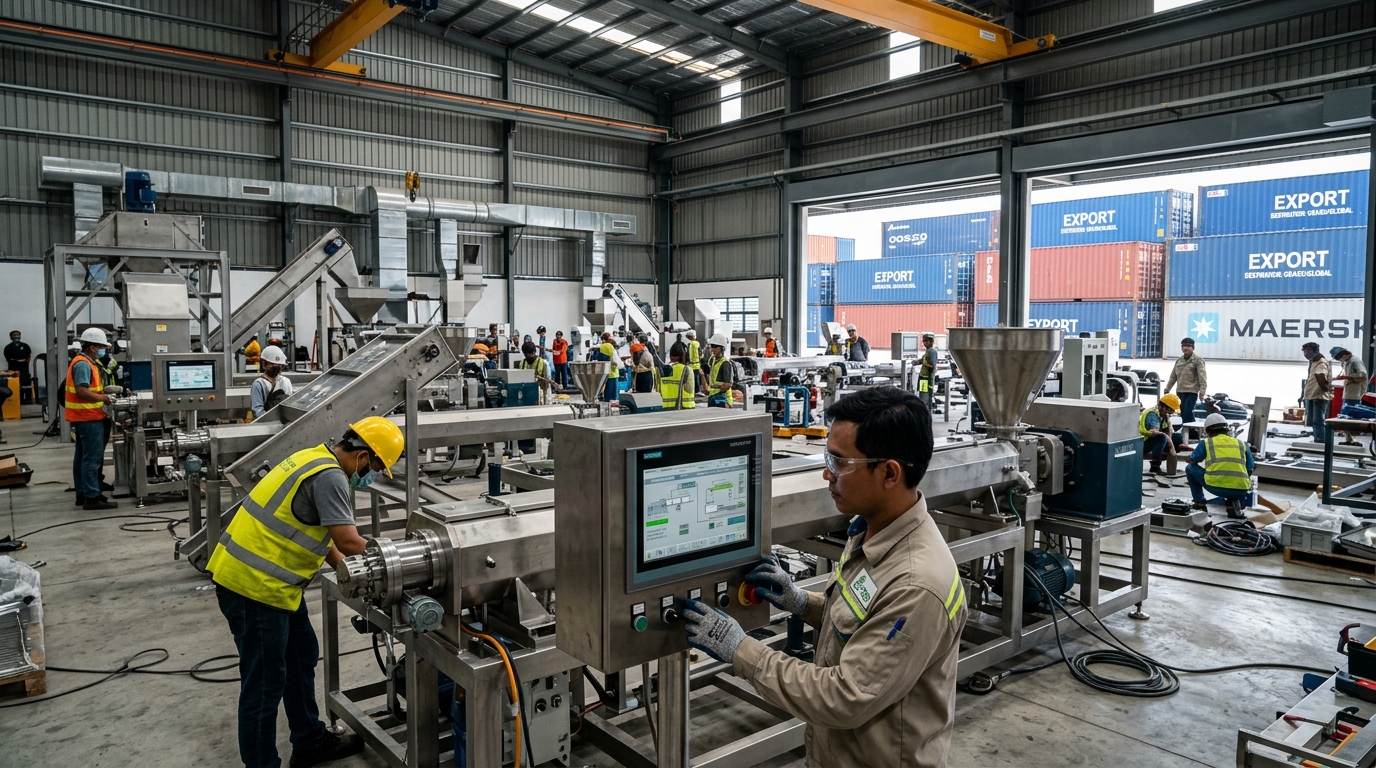
Nicht alle Recyclingmaschinen sind gleich, und kein einzelner Hersteller von Kunststoffrecyclingmaschinen dominiert jede Kategorie. Kluge Kaufentscheidungen beginnen damit, den richtigen Maschinentyp mit dem richtigen Hersteller zu verbinden.
Hochleistungszerkleinerer verarbeiten sperrige Ballen, Fässer und Hartkunststoffe. Vecoplan und WEIMA sind hier führend mit Doppelwellenkonstruktionen, die 3-8 Tonnen pro Stunde verarbeiten können. Ihre Messer aus gehärtetem Stahl halten 30-50% länger als preiswerte Alternativen, was wichtig ist, wenn Sie täglich kontaminierten Post-Consumer-Müll zerkleinern.
Bei der Zerkleinerung unter 12 mm setzen Cumberland (Teil der ACS-Gruppe) und Rapid Granulator Maßstäbe. Ihre offenen Rotoren minimieren den Hitzestau - ein entscheidender Faktor für hitzeempfindliche LDPE- und PP-Folien, die sich bei hohen Temperaturen abbauen.
Effektives Waschen trennt Etiketten, Klebstoffe und Schmutz vor der Weiterverarbeitung. Herbold Meckesheim und Starlinger bieten Friktionswaschanlagen und Heißwaschtanks an, die Verschmutzungsraten von über 98% erreichen. Chinesische Hersteller wie Jiantai haben die Lücke bei PET-Flaschenwaschanlagen bei geringeren Investitionskosten deutlich geschlossen.
Hier wird der materielle Wert geschaffen. Die INTAREMA-Baureihe von Erema ist nach wie vor der Goldstandard für die Umwandlung von Folien in Granulat, während die ZSK-Doppelschneckenextruder von Coperion sich hervorragend für die Aufbereitung von recycelten technischen Kunststoffen eignen. Einen ausführlichen Vergleich von Extrusionsanlagen finden Sie hier Vollständiger Leitfaden für Recycling-Extrusionsanlagen.
Käufer, die eine Lösung aus einer Hand wünschen, sollten Hersteller evaluieren, die vollständig integrierte Anlagen anbieten - von der Zerkleinerung bis zur Granulierung. Erema, Starlinger und mehrere chinesische Spitzenanbieter liefern schlüsselfertige Anlagen mit einem Durchsatz von 500-3.000 kg/h, einschließlich SPS-Automatisierung und Ferndiagnose.
Wählen Sie einen Hersteller von Kunststoffrecyclingmaschinen danach aus, welche Maschinenkategorie zu Ihrem Ausgangsmaterial passt - nicht nur nach dem Prestige der Marke.
Der Preis auf dem Etikett sagt fast nichts aus. Zwei Maschinen mit einem Preis von $85.000 können je nach Energieverbrauch, Ersatzteilverfügbarkeit und tatsächlichem Durchsatz unter realen Bedingungen sehr unterschiedliche Fünfjahreskosten aufweisen. Bei der Bewertung einer Hersteller von Kunststoff-Recycling-Maschinen, brauchen Sie einen Rahmen, der das gesamte finanzielle Bild erfasst.
| Faktor | Europäische Tier-1 | Asiatische Mittelklasse | Asiatischer Haushalt |
|---|---|---|---|
| Durchsatz (kg/Std.) | 500-2,000 | 300-1,500 | 150-500 |
| Preis der Maschine (USD) | $150K-$600K+ | $45K-$180K | $18K-$55K |
| Energieverbrauch (kWh/Tonne) | 180-280 | 250-380 | 350-500 |
| Jährliche Ersatzteilkosten | 2-4% des Kaufpreises | 3-6% | 5-10% |
| Geschätzte 5-Jahres-TCO | 1,4-1,8× Kaufpreis | 1.6-2.2× | 2.0-3.0× |
Beachten Sie die Umkehrung: Die billigste Option ist oft mit den höchsten Gesamtbetriebskosten verbunden. Eine Budgetlinie, die 500 kWh pro Tonne zu $0,10/kWh verbraucht, verursacht allein an Energiekosten $50 pro Tonne - etwa das Doppelte der Betriebskosten eines Starlinger- oder Erema-Systems. Bei über 5.000 Betriebsstunden pro Jahr vergrößert sich dieser Unterschied schnell.
Wenn Angebote auf Ihrem Schreibtisch landen, lassen Sie jede Option durch diese fünf Berechnungen laufen:
Eine genauere Aufschlüsselung, wie die führenden Hersteller bei diesen Kennzahlen abschneiden, finden Sie in unserem Vergleich der 10 besten Hersteller von Kunststoffrecyclingmaschinen. Der richtige Hersteller ist nicht derjenige mit dem niedrigsten Angebot - es ist derjenige, der über die gesamte Lebensdauer der Maschine die geringsten Kosten pro sauberem Kilogramm verursacht.
Eine Maschine, die sechs Monate lang hervorragend läuft, bedeutet nichts, wenn ein defektes Getriebe Ihre Produktionslinie drei Wochen lang lahm legt und auf Ersatzteile wartet. Bei der Bewertung jeder Hersteller von Kunststoff-Recycling-Maschinen, Die After-Sales-Infrastruktur sollte genauso viel Gewicht haben wie die Durchsatzangaben - vielleicht sogar mehr.
Europäische Hersteller wie Erema und Starlinger bieten in der Regel eine 12- bis 24-monatige Garantie für die wichtigsten Komponenten (Extruderschnecken, Zylinder, elektrische Schalttafeln) mit einer garantierten 48-stündigen Ferndiagnose an. Chinesische Hersteller variieren stark: Spitzenunternehmen wie Jiantai und Polystar bieten 12 Monate Vollgarantie mit Vor-Ort-Einsätzen von Technikern innerhalb von 72 Stunden in den meisten Regionen, während Billiganbieter die Garantie auf 6 Monate für ausgewählte Teile beschränken können.
Stellen Sie eine Frage, bevor Sie unterschreiben: “Wie lange dauert es durchschnittlich von der Fehlermeldung bis zum Eintreffen der Teile bei mir?” Alles, was mehr als 10 Arbeitstage für kritische Komponenten dauert, ist ein Warnsignal.
Die besten Hersteller unterhalten regionale Lagerhäuser. Erema hat Teile in Nordamerika, Europa und Südostasien auf Lager. Mehrere führende chinesische Anbieter halten jetzt Bestände in Zolllagern in der Türkei, Mexiko und Dubai vor, wodurch die Lieferzeiten von 30+ Tagen auf unter eine Woche gesenkt werden. Fordern Sie vor dem Kauf immer eine Liste der empfohlenen Ersatzteile mit Preisangaben an; bei weniger bekannten Marken sind Preisaufschläge von 200-400% auf firmeneigene Komponenten üblich.
Praktische Inbetriebnahmeschulungen (in der Regel 5-7 Tage vor Ort) sind bei namhaften Herstellern Standard. Was die Besten auszeichnet, ist der laufende Support: IoT-fähige Fernüberwachungs-Dashboards, videogestützte Bibliotheken zur Fehlersuche und jährliche Auffrischungsprogramme. Einen genaueren Vergleich, wie führende Anbieter diese Verpflichtungen handhaben, finden Sie hier Leitfaden für die Auswahl eines Herstellers von Kunststoffrecyclingmaschinen.
Nach Angaben von Plastics Recycling World kosten Ausfallzeiten bei einer mittelgroßen Recyclinganlage $500-$2.000 pro Stunde. Die billigste Maschine wird zur teuersten, wenn man sie nicht reparieren lassen kann.
Eine vage Anfrage führt zu einem vagen Angebot - und vage Angebote verbergen die Kosten. Bevor Sie mit einem Hersteller von Kunststoff-Recycling-Maschinen, Erstellen Sie ein einseitiges Lastenheft mit den wichtigsten Angaben: angestrebte Harzarten (PP, PE, PET, gemischt), Eingangsform (Flocken, Folie, Hartschrott), gewünschter Durchsatz in kg/Std., verfügbare Stromversorgung (Spannung, Phase, Frequenz) und Grundfläche Ihrer Anlage in Quadratmetern. Je genauer Ihre Angaben sind, desto schwieriger ist es für einen Anbieter, den Preis zu drücken.
Achten Sie auf Angebote, in denen die Versandbedingungen (FOB vs. CIF) fehlen, die Kosten für die Inbetriebnahme ausgelassen werden oder “optionale” Posten wie Schalttafeln aufgeführt werden, die eigentlich unerlässlich sind. Wenn ein Angebot keine detaillierte Materialliste enthält, sollten Sie es zurückweisen. Jeder seriöse Hersteller wird Motoren, Getriebe, Siebe und elektrische Komponenten nach Markennamen auflisten.
Fordern Sie mindestens drei konkurrierende Angebote an und vergleichen Sie sie Zeile für Zeile - nicht nur in Bezug auf den Gesamtpreis, sondern auch auf die Garantiedauer, die Preise für Ersatzteile und die enthaltenen Schulungsstunden.
Die Standardzahlungsstrukturen folgen einer 30/30/40-Aufteilung: 30% Anzahlung, 30% vor dem Versand nach der Werksabnahme (FAT) und 40% nach der Inbetriebnahme vor Ort. Vermeiden Sie alle Hersteller, die mehr als 50% im Voraus verlangen. Einen detaillierten Vergleich geprüfter Lieferanten finden Sie in unserem Leitfaden über Die besten Hersteller von Kunststoffrecyclingmaschinen und wie man sie auswählt.
Werksbesuche sind nach wie vor der goldene Standard für die Sorgfaltsprüfung. Wenn eine Reise nicht möglich ist, bestehen Sie auf einem virtuellen Live-Audit - und nicht auf einem vorab aufgezeichneten Video -, bei dem Sie die Kamera auf die Montagehalle, die Prüfstände und die QC-Stationen richten können. Inspektionsdienste von Dritten wie SGS oder Bureau Veritas berechnen in der Regel $300-$800 pro Besuch und sind jeden Dollar wert.
Die meisten Hersteller geben 45-90 Tage für Standardkonfigurationen an. Kundenspezifische Anlagen - insbesondere solche, die gemischte Post-Consumer-Abfälle verarbeiten oder spezielle Schneidköpfe erfordern - können bis zu 120 Tage oder mehr in Anspruch nehmen. Europäische Hersteller wie Erema und Starlinger haben oft längere Lieferzeiten (90-150 Tage) aufgrund der höheren Nachfrage und der präzisen Konstruktionsphasen, während viele chinesische Lieferanten Standardmodelle innerhalb von 30-60 Tagen liefern.
Auf jeden Fall, und Sie sollten darauf bestehen. Eine Anlage, die für starre HDPE-Flaschen konzipiert wurde, funktioniert schlecht bei flexibler LDPE-Folie, wenn die Schneckengeometrie nicht geändert, andere Entgasungssysteme eingesetzt und die Filtration angepasst wird. Jede glaubwürdige Hersteller von Kunststoff-Recycling-Maschinen bietet materialspezifische Konfigurationen an. Schicken Sie in der Angebotsphase Probenmaterial ein, damit das Werk Probetests durchführen und das richtige L/D-Verhältnis, die Siebwechsler-Maschengröße und das Granulierverfahren empfehlen kann.
Die Zahlungsstrukturen sind sehr unterschiedlich. Üblich sind 30% Anzahlung mit 70% vor Versand (T/T-Bedingungen), Akkreditive für Bestellungen über $100.000 und - in zunehmendem Maße - Leasingprogramme über Drittpartner. Einige chinesische Hersteller bieten inzwischen für Wiederholungskäufer Zahlungsaufschübe über 12-24 Monate an. Erkundigen Sie sich immer, ob die Finanzierung die Kosten für Installation und Inbetriebnahme oder nur die Geräte selbst abdeckt.
Der Abstand hat sich deutlich verringert. Chinesische Spitzenhersteller verwenden jetzt SKD11-Werkzeugstahl für die Klingen, Antriebskomponenten von Siemens oder ABB und Lager nach deutschem Standard - dieselben Komponenten, die auch in europäischen Maschinen zu finden sind. Wo europäische Hersteller immer noch einen Vorsprung haben, ist bei der Softwareintegration, den Energieoptimierungsalgorithmen und der langfristigen Toleranzkonstanz nach 8-10 Jahren intensiver Nutzung. Eine detaillierte Aufschlüsselung der führenden chinesischen Anbieter finden Sie hier Rangliste der führenden Hersteller von Kunststoffrecyclingmaschinen in China.
Sie haben die Daten gesehen - Durchsatz-Benchmarks, Aufschlüsselung der Gesamtbetriebskosten, regionale Stärken, Realitäten des Kundendienstes. Komprimieren Sie nun all diese Daten zu einer Entscheidung, die passt Ihr Operation, nicht die einer anderen Person. Verwenden Sie die folgende Checkliste, bevor Sie etwas unterschreiben.
Ziehen Sie zwei oder drei Hersteller in die engere Wahl, die Ihrer Materialart, Ihrem Budget und der angestrebten täglichen Tonnage entsprechen. Schicken Sie jedem von ihnen eine detaillierte Anfrage, in der Sie den Verschmutzungsgrad, die gewünschte Qualität der Pelletproduktion und die verfügbaren Hilfsmittel angeben. Vergleichen Sie dann die Antworten miteinander - die Lücken werden Ihnen alles verraten.
Benötigen Sie einen Ansatzpunkt? Unser Leitfaden für die führenden Hersteller von Kunststoffrecyclingmaschinen ordnet die Anbieter nach Spezialisierung, Preisklasse und globaler Reichweite ein, damit Sie das Feld schnell eingrenzen können.
Fordern Sie noch heute maßgeschneiderte Angebote an. Der richtige Hersteller wird Ihnen nicht einfach nur eine Maschine verkaufen - er wird ein System entwickeln, das sich selbst bezahlt macht.