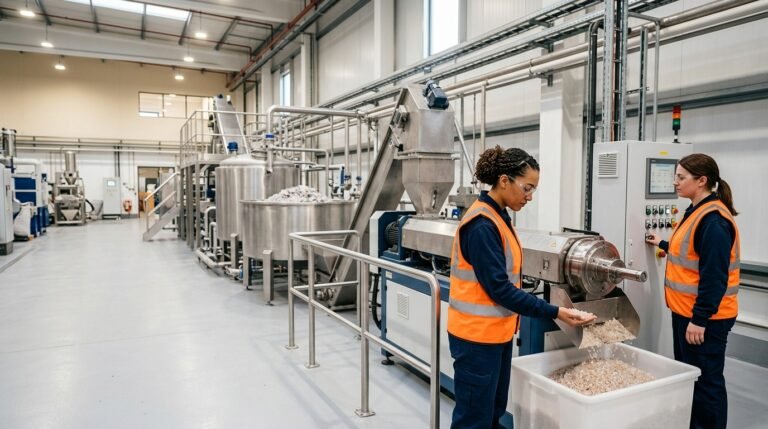
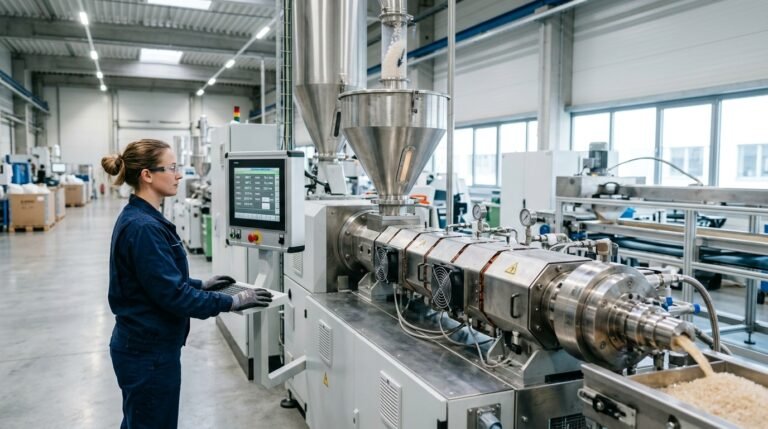
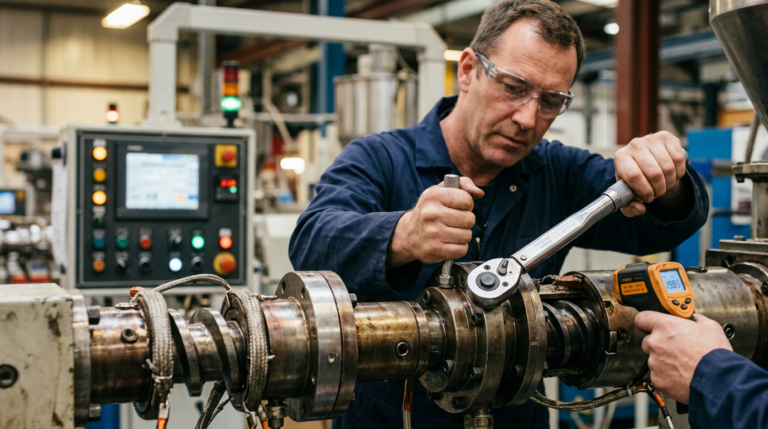
Make some changes to the world environment
The machine you bought will bring you profits, but it will also indirectly change the world environment and give waste plastics a chance to be utilized.

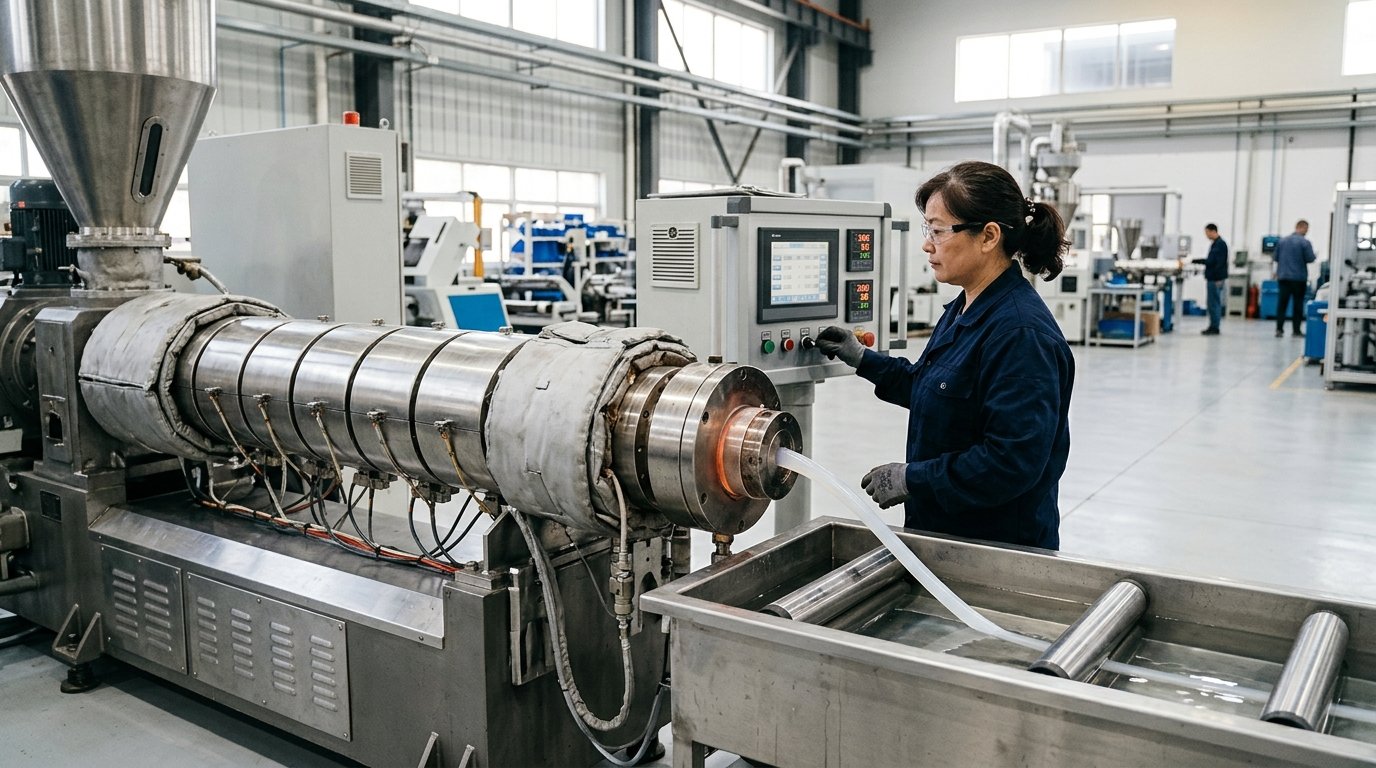
A plastic extruder machine is selected by four core specifications—output, motor power, screw design, and temperature control—not by appearance. A twin-screw PVC extruder sold in India in 2024 ran at roughly 200 kg[1]/hour, drew a three-phase 40 kW motor at 440 V/50 Hz, and listed near ₹1,350,000 per unit. These underlying numbers explain why two machines sharing the same name can differ in price by up to ten times.
JianTai’s view on this is fairly simple. You should pick the extruder by its output, motor, screw, and control numbers, and not by the photo in the brochure. This guide answers five core questions: how the amount produced and the screw design connect to each other, why the motor kW matters just as much as the screw diameter does, which 7 specifications you really must compare before buying, what each specification ends up costing you in scrap or in periods when the machine isn’t running, and how you match a machine to the product you actually make.
There are seven specs that really decide which plastic extruder machine comes out on top, and those are the L/D ratio, the screw design, the output rate, the motor power, the temperature zones, the screw diameter, and the build material. You want to compare all of these before you ever look at the price. A 200 kg/hour twin-screw PVC line is listed at roughly ₹1,350,000 in 2024 with a motor around 40 kW[2], which is proof that power and output really travel together.
You should skip the fancy words in the brochure. Two machines can both claim to be “high output,” and yet one of them melts the material evenly at 200 kg/hour while the other one surges and ends up burning the resin. The real difference is hiding inside the seven numbers listed below.
Here is the quick comparison sheet that buyers should bring along to any quote they get:
| Spec | What it controls | Typical range |
|---|---|---|
| L/D ratio | How the melt mixes and how long it stays inside | 20:1 to 40:1 |
| Screw design | How material is handled and how much shear it gets | Single, twin, conical |
| Output rate | How much it produces every hour | 1 kg/h for hobby use up to 200+ kg/h for industrial work |
| Motor power | The turning force and the top capacity it can reach | 2 kW to 40 kW+ |
| Temperature zones | How heat is staged depending on the polymer | 3 to 6+ zones |
| Screw diameter | The volume the screw is able to move along | 20 mm to 132 mm |
| Build material | How long it lasts before wearing and how well it resists corrosion | Nitrided steel, bimetallic barrels |
Here is one helpful tip that most spec sheets tend to bury, which is to match the screw diameter to the motor power. A wide 65 mm screw that is starved by a weak motor will just stall once it is under load. JianTai’s view, when it comes to recycling lines, is to weigh the build material first, because the abrasive flake that comes from waste plastic chews through soft barrels really fast, so going with bimetallic or nitrided steel pays you back through fewer rebuilds.
Each of these specs gets its own closer look up ahead. You should read through those before you go and sign anything.
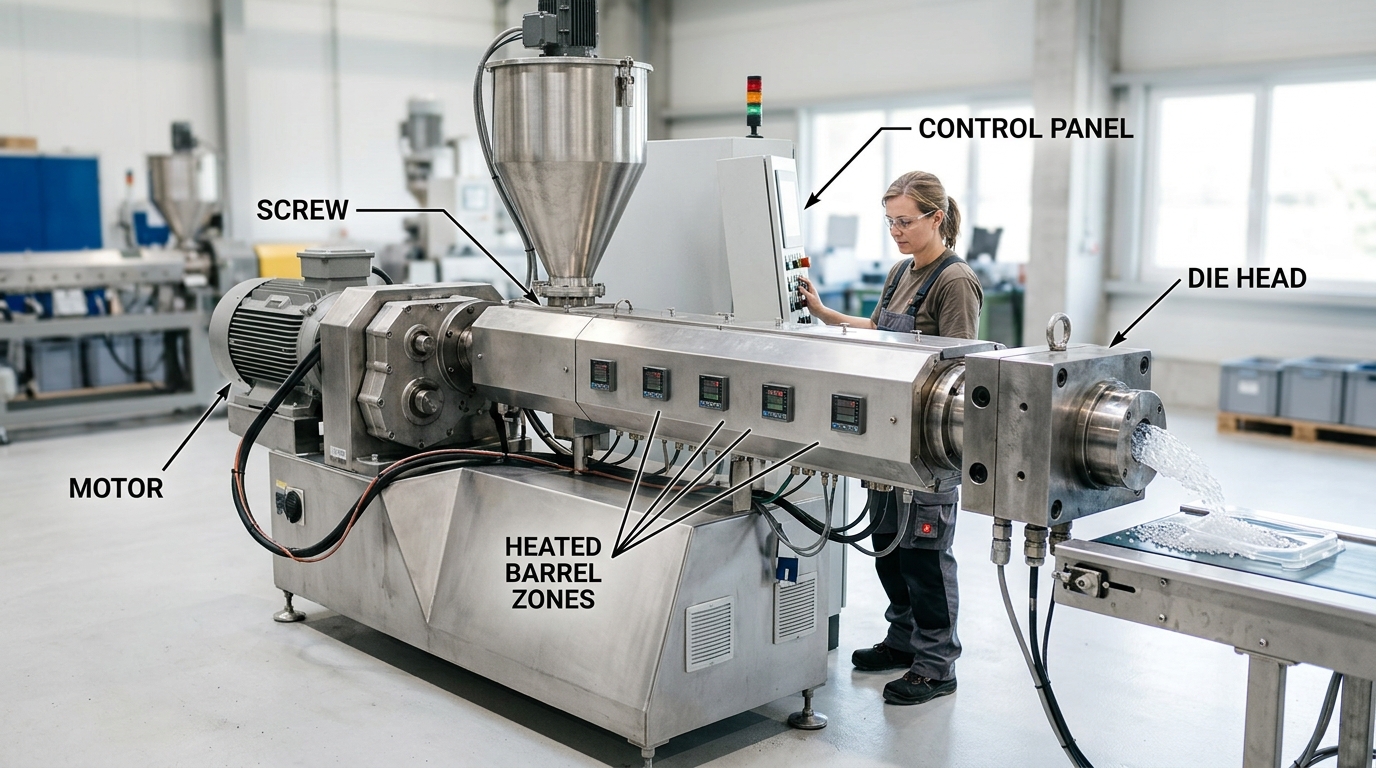
The L/D ratio is the screw length divided by its diameter, and it predicts how well a plastic extruder machine melts, mixes, and degasses your resin. A longer barrel (higher L/D) gives the polymer more residence time, which means more complete melting and better mixing. Most commodity machines run 20:1 to 24:1; engineering and filled compounds need 30:1 or more.
Think of L/D as cooking time. A 24:1 barrel is a quick fry, fine for forgiving resins like PE or PP that melt fast and tolerate uneven heat. Push a glass-filled nylon through that same short barrel and you get unmelted lumps, because the screw runs out of room before the pellets fully soften.
A 24:1 barrel matches commodity resins because polyethylene and polypropylene melt at low shear and need little mixing. Shorter screws cost less and run faster per kilowatt. According to Wikipedia’s extrusion overview, the three screw zones, feed, compression, metering, each need barrel length to work; a short screw simply has less of each. For pipe and film made from PE, that trade-off is acceptable and keeps throughput high.
You need 30:1 or higher when you process engineering plastics, vented (degassing) compounds, or anything with fillers like talc or glass fiber. The extra length adds a vent zone to pull out moisture and volatiles, plus more melt-homogenizing distance. The catch: longer barrels lower specific output per RPM and raise motor load, so you trade some throughput for melt quality.
| L/D Ratio | Best For | Melt/Mixing | Throughput Effect |
|---|---|---|---|
| 20:1–24:1 | PE, PP, PVC commodity | Basic, no venting | Highest per RPM |
| 28:1–30:1 | ABS, PC, vented lines | Good mixing + degassing | Moderate |
| 32:1–36:1 | Glass-filled, compounding | Thorough, multi-stage | Lower per RPM, higher quality |
For recyclers, JianTai’s guidance is straightforward: contaminated flake with trapped moisture demands a vented barrel near 30:1, not a 24:1 line built for virgin pellets. A commercial conical twin-screw PVC line such as the SJSZ65/132 class (2023) handles several hundred kilograms per hour precisely because its geometry gives PVC powder enough length to gel without burning.
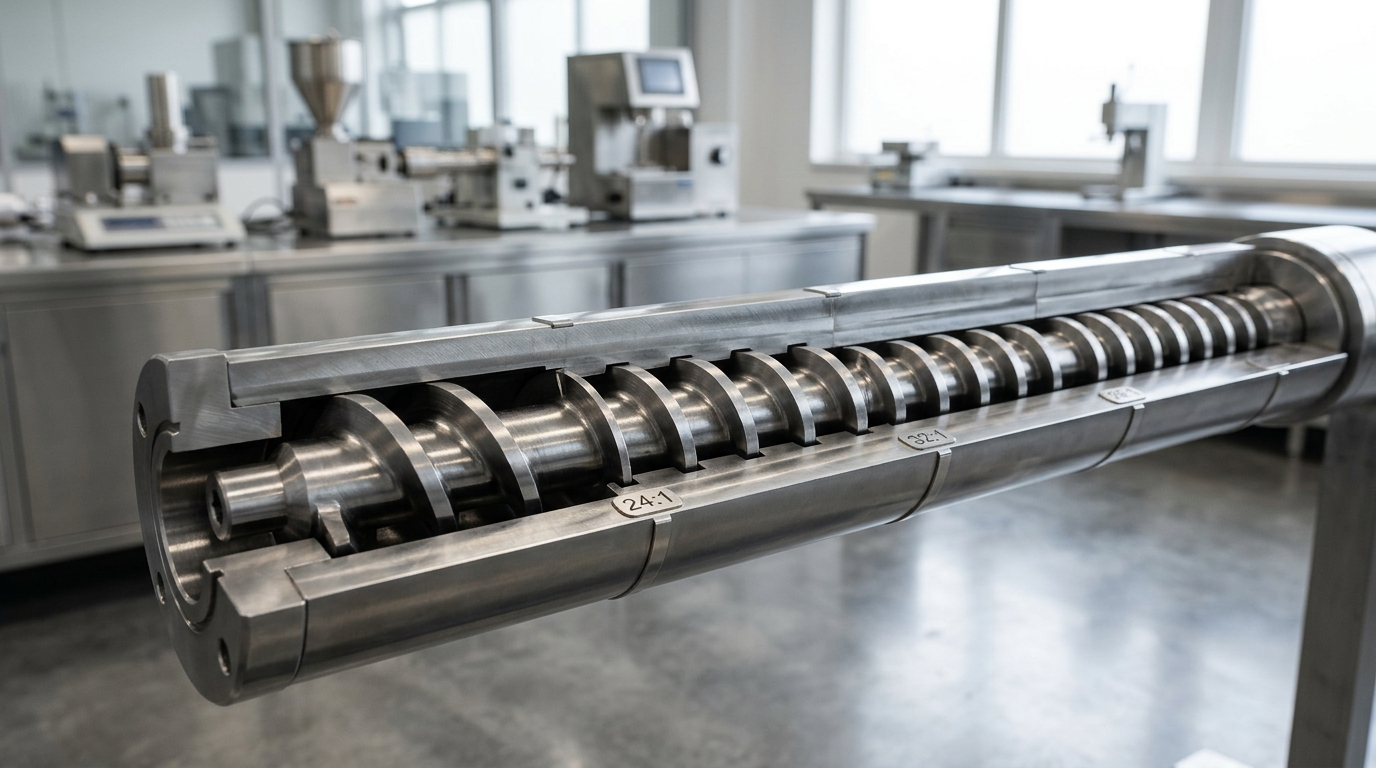
Choose a single-screw plastic extruder machine when you want clean, uniform pellets for products like pipe and profile. Choose a co-rotating twin-screw when your raw material is gentle to shear, sensitive to heat, or made of contaminated recycled material that really needs thorough mixing. DIY kits work well for prototyping at roughly 1 kg per hour, and you can put one together for under ~200 USD in low-cost builds. The smart move is to match the screw design to your dirtiest input rather than your cleanest, since the machine has to cope with the worst material you feed it.
A single-screw machine wins on both price and how much material it can push through when you are running one steady, clean polymer. It melts the pellets using a mix of shear and heat, then forces the melted plastic through a die for continuous output such as tubing, fencing, and window frames. The trouble is that it mixes poorly. Feed it dirty flake or fillers, and you end up with gels, surging flow, and weak welds where the material does not bond properly.
Twin-screw extruders use two screws that mesh together, which gives you controlled mixing and a gentle amount of time that the material spends inside the machine. That gentleness protects heat-sensitive PVC powder from breaking down. Conical counter-rotating twin-screws, like the SJSZ65/132 class, are built for PVC pipe and profile, while co-rotating designs are made for compounding and for degassing recycled flake that carries a lot of moisture. Industrial PVC twin-screw units run near 200 kg/hour while drawing roughly 40 kW of power.
| Design | Best feedstock | Typical use | Mixing ability |
|---|---|---|---|
| Single-screw | Clean pellets, one polymer | Pipe, tube, fencing | Low |
| Co-rotating twin-screw | Contaminated/recycled flake | Compounding, degassing | High |
| Conical counter-rotating | PVC powder | PVC pipe/profile | Medium |
| DIY kit | Sorted scrap | Prototyping, filament | Low |
JianTai’s take on recycling equipment is blunt and worth hearing. If your input is washed-but-not-perfect post-consumer flake, a single-screw machine will starve and surge because it cannot handle the inconsistency. The better choice is to specify a twin-screw with a vacuum vent that pulls out moisture and volatiles as the material passes through.
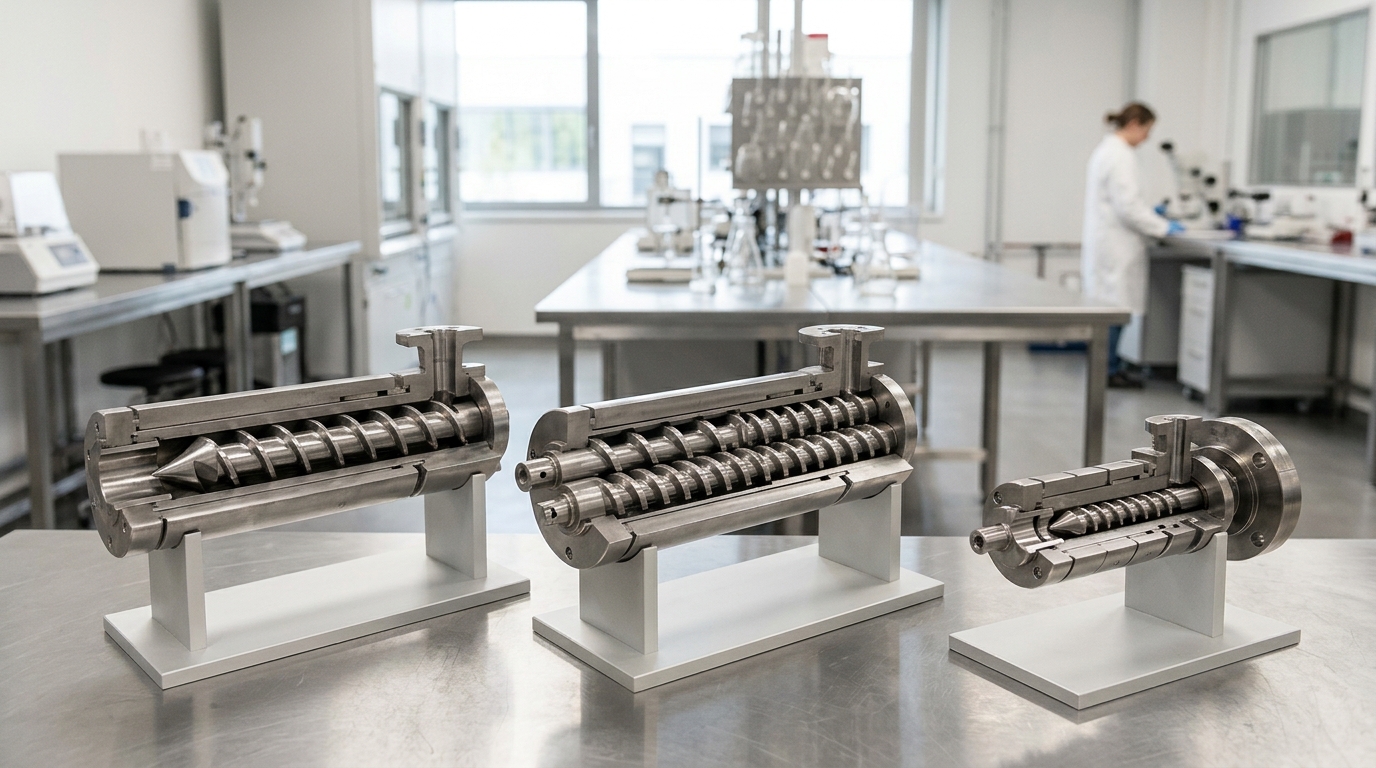
Match the screw diameter to your target kg/hr first, then size the motor power to whatever the polymer’s shear needs are, rather than working backward from the motor. A 65mm[3] conical twin-screw line for PVC pipe draws roughly 40 kW and runs near 200 kg/hr, and it was listed around ₹1,350,000 in 2024 on the Indian industrial market. The idea is simple enough: pick the diameter for the amount produced, then pick kW so you never starve the screw at full speed.
Diameter sets the volume the screw can move per turn. Power, on the other hand, sets how hard you can push thick, viscous melt through a die. Both really matter here. A fat screw paired with a weak motor will stall under load, and a strong motor bolted onto a thin screw just wastes energy and money for no benefit.
For single-screw machines, the amount produced scales roughly with the cube of the diameter, though the real numbers depend on the polymer and the L/D ratio. Treat these figures as planning anchors, not as promises:
| Screw Diameter | Typical Output (PE/PP) | Typical Motor Power | Common Job |
|---|---|---|---|
| 45mm | 30–60 kg/hr | 11–15 kW | Small profiles, filament, lab runs |
| 65mm | 120–250 kg/hr | 22–45 kW | Pipe, sheet, mid-volume recycling |
| 90mm[4] | 300–500 kg/hr | 55–90 kW | Large pipe, high-volume pelletizing |
Notice how the jump from 65mm to 90mm roughly doubles the amount produced, but it also doubles the power draw. Buying the 90mm “to be safe” when you really only need 150 kg/hr means paying for kW you will never actually use, and running a big screw at half speed often hurts the quality of the melt anyway.
kW and diameter govern two completely different limits, so you genuinely need both of them right. The diameter caps how much material the channel can hold, while the kW caps how stiff a melt you can shove through the die. Soft polymers like LDPE need less torque, so a 65mm screw running at 22 kW copes just fine. Rigid PVC powder is far more viscous, though, and that same 65mm screw needs closer to 40 kW to hit 200 kg/hr without the motor laboring.
Starve the motor and you end up with surging, parts that come out off as expected, and drive overload trips. Oversize it past the screw’s mechanical torque rating and you risk twisting the screw shaft itself. The fix is to confirm the gearbox torque limit, not just the nameplate kW.
For waste-plastic recycling, the input material is messy, with mixed flake, variable moisture, and contamination all showing up at once. JianTai sizes its recycling extruders with extra headroom on motor torque rather than on diameter, because dirty flake spikes the shear loads in ways you cannot really predict. The practical rule is to target approximately 80% of rated kW at steady output, which leaves a 20%[5] buffer for the density swings that come with recycled feed. That margin is what stops the line stalling mid-shift when a denser batch suddenly hits the screw.
Decide your daily tonnage first. Need 1.5 tonnes per 8-hour shift? That works out to about 190 kg/hr, and a 65mm line at 40 kW covers it with margin to spare. Skip the spec sheet’s peak output number and size for sustained running, not for the burst.
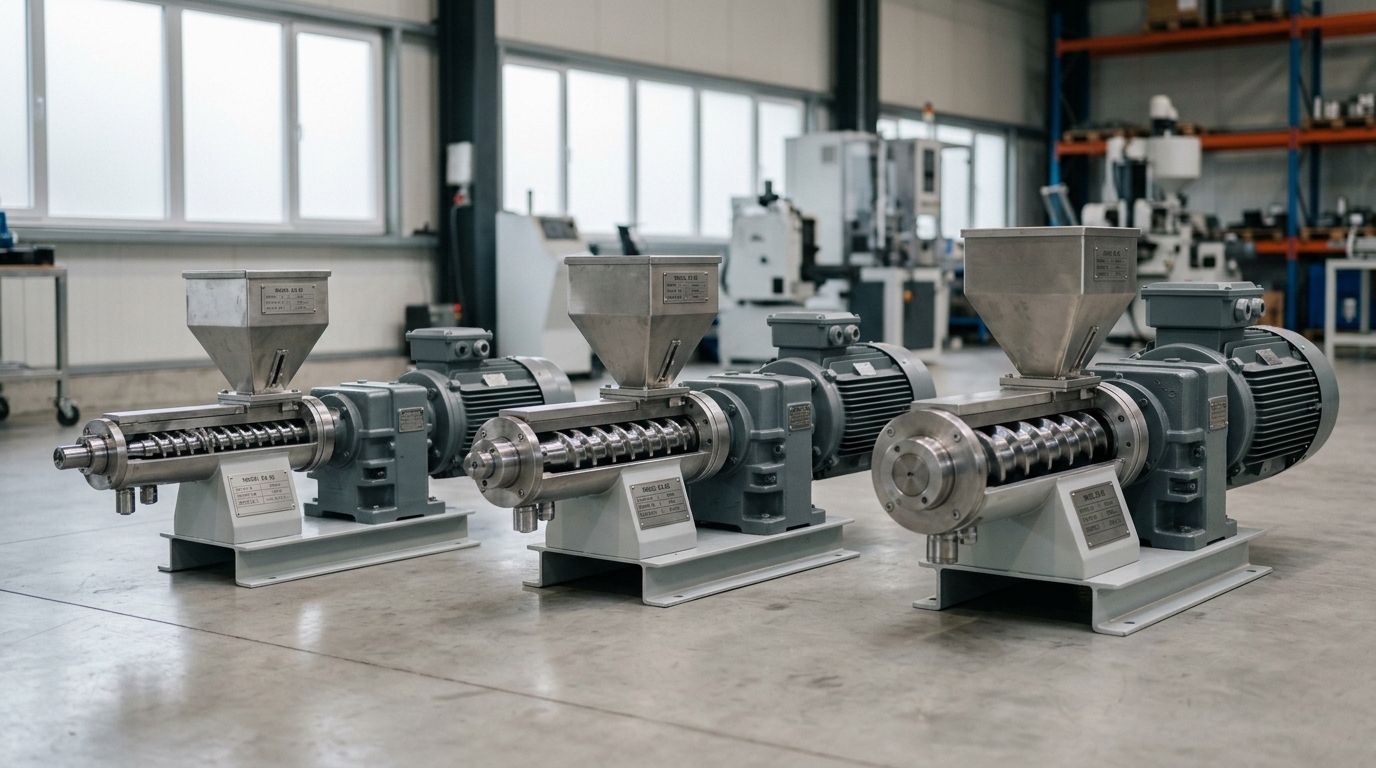
Temperature zones and polymer type decide the right machine because each plastic melts in a narrow window, and the barrel must hold that window across every zone. PVC processes near 160,200°C and burns above that; HDPE runs hotter at 200,260°C. A plastic extruder machine with too few zones or weak control cooks one polymer while underfeeding another.
⚠️ Common mistake: Choosing an extruder by brochure photos or screw diameter alone, ignoring motor kW. This happens because buyers assume a bigger screw automatically means higher throughput. The fix: match motor power to screw diameter—a 200 kg/hour twin-screw PVC unit needs roughly a 40 kW three-phase motor; a mismatch can cost up to 10x the base price in downtime and scrap.
Why does mismatched heat cause scrap? PVC releases hydrochloric acid when it overheats, which corrodes the barrel and stains output yellow or brown. That degradation is permanent, you can’t reverse a color shift once the polymer chains break.
PVC needs at least 4 zones plus a separate die zone, because its melt window is only about 40°C[6] wide. Stray 10°C high and you risk burning. PET demands tight drying and 5 zones to manage crystallization at 250,280°C. HDPE forgives more, 3 zones often suffice given its 60°C window.
Recycled blends mix polymers with different melt points, so the barrel sees PVC and HDPE fighting for the same set temperature. JianTai builds recycling-focused extruders with extra vented zones and tight PID loops precisely because waste plastic carries moisture and contaminants that ruin output without active cooling. Industrial PVC twin-screw lines rated near 200 kg/hour, priced around ₹1,350,000 in 2024, run roughly 40 kW, and that motor power generates shear heat your cooling system must offset.
| Polymer | Melt range | Min zones | Key risk |
|---|---|---|---|
| PVC | 160–200°C | 4 + die | HCl release, browning |
| HDPE | 200–260°C | 3 | Underheating, surging |
| PET | 250–280°C[7] | 5 | Hydrolysis if not dried |
| Recycled blend | varies | 4 + vent | Moisture bubbles, scorch |
The true total cost of owning a plastic extruder machine runs 2 to 4 times the purchase price over five years, once you add energy, wear parts, maintenance, and downtime. A ₹1,350,000 twin-screw PVC unit drawing 40 kW at 200 kg/hr burns far more electricity over its life than the screw ever cost. Sticker price is the smallest number you’ll pay.
Energy dominates. A 40 kW machine running 4,000 hours a year uses 160,000 kWh, at approximately $0.12/kWh that’s approximately $19,200 annually, or approximately $96,000 across five years. That single line item dwarfs the screw and barrel set.
Screw and barrel wear is the second killer. The barrel bore (the steel tube the screw spins inside) grows by abrasion when processing filled or glass-reinforced plastics. A nitrided barrel lasts 3 to 6 years; bimetallic liners stretch that to 8 or more. A replacement screw-barrel pair on a 65 mm machine runs $4,000 to $12,000.
A low-spec machine wears faster and stops more often. Each unplanned downtime hour on a 200 kg/hr line loses 200 kg of saleable output plus labor. Cheap nitriding and undersized motors compound this.
| Factor | Budget 65mm unit | Quality 65mm unit |
|---|---|---|
| Purchase price | $12,000 | $22,000 |
| Barrel life | 3 years | 8 years |
| Energy/kg | 0.45 kWh | 0.32 kWh |
| Downtime/year | 120 hrs | 30 hrs |
| 5-yr cost per kg | $0.21[9] | $0.14 |
For recyclers, JianTai recommends sizing energy efficiency and barrel metallurgy first, those two lines decide cost-per-kg long after the invoice is paid.
Diagnose extrusion defects by tracing each symptom back to a spec failure: surging usually means wrong L/D or worn screw flights; melt fracture points to undersized die or excessive shear; die drool signals poor temperature zoning. Most defects on a plastic extruder machine aren’t “bad luck”, they are predictable results of mismatched specs you can catch before buying.
Surging means your output pulses, diameter swings up and down every few seconds. The root cause is unstable melting. A short L/D ratio (under 20:1) gives the polymer too little time to fully melt, so half-melted slugs push through unevenly. Worn screw flights are the second suspect: once flight clearance opens past 0.2 mm, the screw stops gripping material consistently.
Check the feed throat temperature too. If it runs hot, pellets bridge and slip. Industrial PVC lines process several hundred kilograms of PVC per hour only when zone control holds each section within tight bands.
Melt fracture shows as a rough, shark-skin surface on the finished part. It happens when polymer moves through the die faster than it can flow smoothly, too much shear at the die wall. Fix it by lowering screw RPM, raising die temperature, or choosing a larger die land. An undersized motor often forces operators to over-rev a small screw, which is exactly what triggers this defect.
| Defect | Spec failure | First fix |
|---|---|---|
| Surging | L/D under 20:1, worn flights | Verify melt completion, check flight wear |
| Melt fracture | Undersized die, over-revved screw | Lower RPM, raise die temp |
| Die drool | Weak end-zone heating | Tighten final zone tolerance |
| Diameter drift | Unstable motor torque | Confirm motor sized for polymer viscosity |
JianTai’s view: in recycling lines, contaminated flake makes these defects worse, so spec a machine with strong zoning and adequate torque margin from the start. For a deeper look at shear behavior, see the extrusion process overview.
Recyclers most often undersize venting and pick the wrong screw geometry for dirty feedstock. Recycling lines commonly accept plastic in flake form via a steel hopper before melting through the screw-and-barrel system. When that flake carries moisture or contamination, an unvented barrel traps gas, and the line stops. The fix is degassing capacity, not just more horsepower.
Undersized venting causes stoppages because moist or mixed waste plastic releases steam and volatiles inside the barrel. Trapped gas creates voids, surging, and burst pellets. Post-consumer flake can hold 0.3% to 1% surface moisture before drying. A single vent zone often can’t pull that off fast enough. JianTai’s recommendation for wet streams is a vented screw section with an open atmospheric port, plus a vacuum pump pulling under 50 mbar to strip steam continuously.
A high-compression single screw built for virgin pellets jams on mixed waste. Contaminated flake needs a lower compression ratio, around 2.5:1 to 3:1, with a longer feed zone to grip irregular pieces. Co-rotating twin-screw designs handle blended polymers and fillers better because the intermeshing screws self-clean and mix unevenly melting material.
| Feedstock issue | Common buyer mistake | Spec that prevents stoppage |
|---|---|---|
| Surface moisture (PET, film) | No degassing port | Vacuum vent under 50 mbar |
| Mixed polymers | Single screw, high compression | Co-rotating twin-screw, self-wiping |
| Paper/dirt contamination | No melt filter | Continuous screen changer |
| Irregular flake size | Short feed zone | Extended grooved feed section |
One missing screen changer turns a clean run into hourly shutdowns. For contaminated streams, specify a continuous or backflush filter so the line never stops to swap screens by hand.
A commercial plastic extruder machine costs roughly ₹1,350,000 (about $16,000) for a 200 kg/hr twin-screw PVC unit on the Indian market in 2024, per IndiaMart listings. DIY builds run under $200. Used machines can save 40,60% upfront but carry hidden wear risk. Below are the questions buyers ask most.
Prices split into three tiers. Open-hardware DIY kits processing 1 kg/hr stay under about 300 AUD ($200) in low-cost builds. Industrial twin-screw lines for PVC pipe (three-phase, 40 kW, 440 V[10]) sit near $16,000. Large compounding lines exceed $100,000. Pair this with the total-cost figures in Section 6, purchase price is only 25,50% of lifetime spend.
Used machines make sense when the barrel and screw show under 0.2 mm radial wear. Beyond that, melt pressure drops and surging starts, the same defect chain explained earlier. Always demand a borescope photo of the screw flights and ask for the last die’s output samples. Skip any unit missing its temperature controller spec sheet.
JianTai’s recycling-equipment approach favors serviceable, standard-part designs so waste-plastic operators avoid month-long downtime waiting for proprietary components.
Run the seven specs in this exact order: L/D ratio, screw design, screw diameter, motor power, temperature zones, total cost of ownership, then defect-resistance margin. Sequencing matters because each spec constrains the next. A 200 kg/hr PVC pipe line, for example, locks you into a conical twin-screw and roughly 40 kW of motor power before you even price the barrel.
Work the checklist against your budget and feedstock first, then talk to vendors.
Skip generic quotes. Send a one-page brief with your polymer type, contamination level, and kg/hr target, then demand a witnessed sample run before signing. For recycling-focused plastic extruder machine selection, JianTai’s approach centers on matching screw geometry and venting to mixed waste streams, so request their pelletizing trial data on your exact flake. A machine that performs on your scrap, not a vendor’s clean test pellets, is the only one worth buying.