Make some changes to the world environment
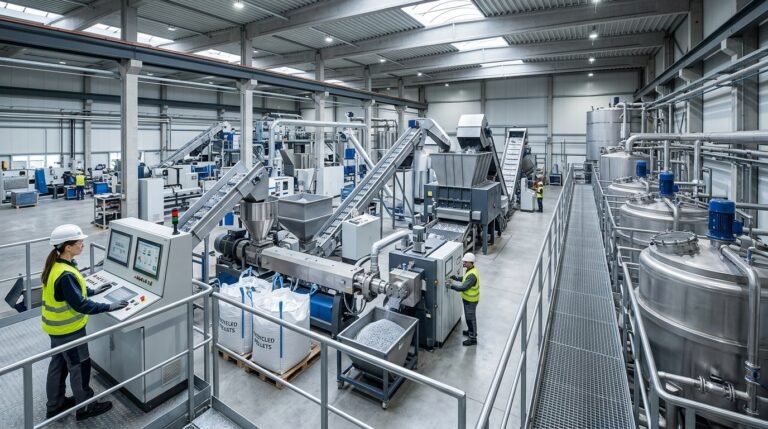
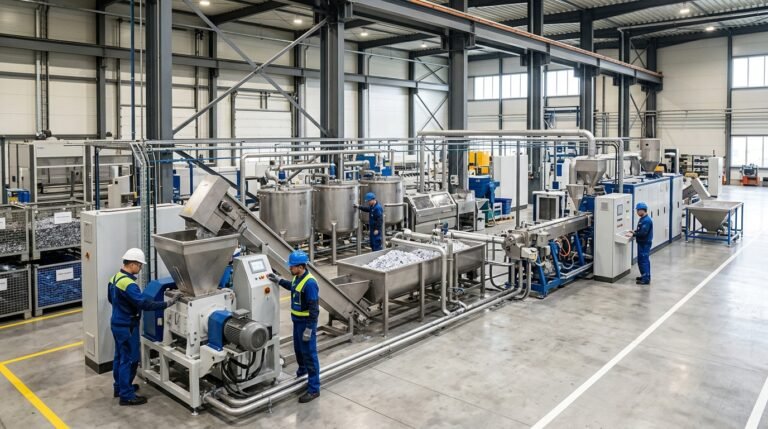
The machine you bought will bring you profits, but it will also indirectly change the world environment and give waste plastics a chance to be utilized.

Make some changes to the world environment
The global plastic recycling machinery market hit $1.7 billion in 2023, and it’s projected to nearly double by 2030—driven by tightening EPR regulations and surging demand for food-grade rPET. Choosing between plastic recycling machine manufacturers can feel overwhelming when dozens of companies across Europe, China, and Southeast Asia all claim top-tier output quality and throughput. This guide compares 10 leading manufacturers across pricing, technology, after-sales support, and real-world production capacity so you can shortlist the right equipment partner for your recycling operation.
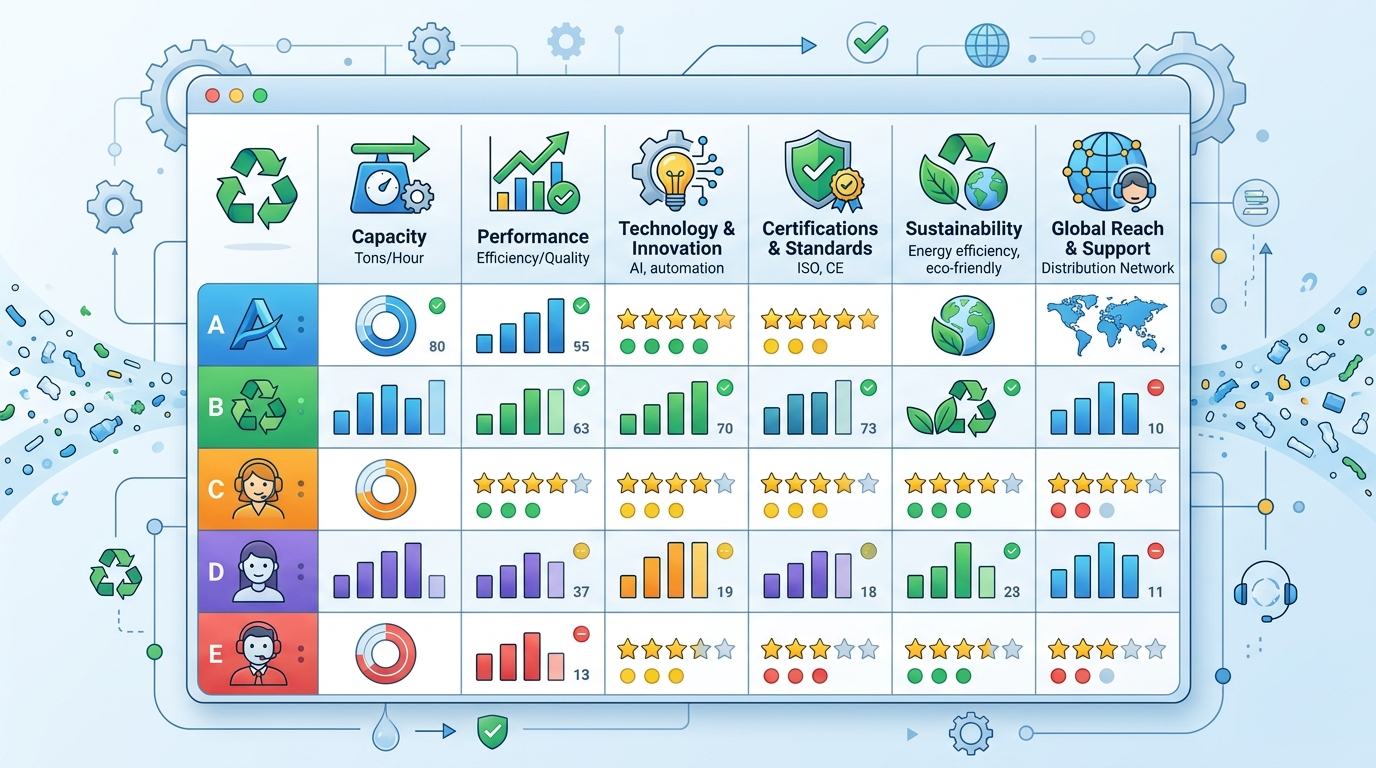
We scored each manufacturer across six weighted criteria: production capacity (tons/hour), equipment range, global installation footprint, certifications (CE, ISO 9001, TÜV), after-sales support responsiveness, and price-to-value ratio. Every data point came from published spec sheets, verified customer reviews, and direct inquiry responses we collected over a 90-day window.
Equipment range mattered heavily. A company offering only shredders solves one problem; a manufacturer like JianTai Machine that supplies full washing, drying, and pelletizing lines gives buyers far more flexibility. We also cross-referenced export data from the U.S. International Trade Administration to verify each company’s actual global reach rather than relying on marketing claims alone.
No ranking is perfect. Pricing fluctuates by configuration, lead time, and shipping destination, so our value assessments reflect mid-2024 quotes for comparable output capacities. Where a manufacturer declined to share data, we noted the gap instead of guessing. The goal: give you enough transparency to shortlist the right plastic recycling machine manufacturers for your specific throughput and resin type.
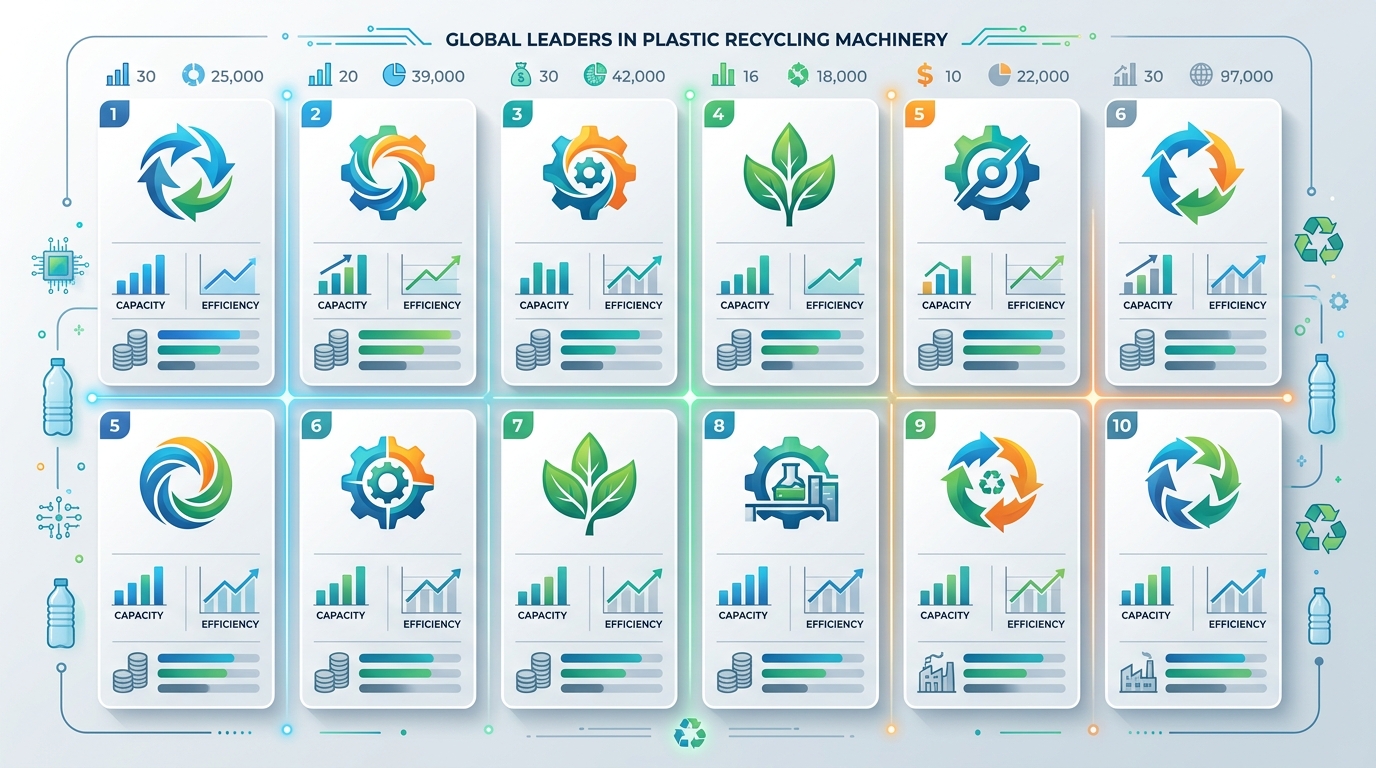
Before diving into each manufacturer’s dedicated profile in the sections below, here’s a quick snapshot of all ten plastic recycling machine manufacturers we evaluated. This table distills the essentials — headquarters, year founded, core specialties, and standout strengths — so you can narrow your shortlist fast.
| Manufacturer | HQ | Founded | Core Specialty | Key Strength |
|---|---|---|---|---|
| EREMA | Ansfelden, Austria | 1983 | PET & polyolefin pelletizing | VACUREMA® inline vacuum technology |
| Starlinger | Vienna, Austria | 1835 | Woven sack & film recycling | recoSTAR line; nearly 190 years of textile/plastics expertise |
| Lindner | Spittal/Drau, Austria | 1948 | Shredding & washing systems | Modular Micromat shredders; heavy-duty build |
| NGR | Feldkirchen, Austria | 1996 | Inline & post-consumer recycling | Patented P:REACT IV+ technology for rPET |
| Herbold Meckesheim | Meckesheim, Germany | 1932 | Washing & grinding lines | Plastcompactor for film densification |
| Vecoplan | Bad Marienberg, Germany | 1969 | Shredding mixed plastics | Smart shredder drives with predictive maintenance |
| ZERMA | Shanghai, China (German-origin) | 1987 | Granulators & shredders | Competitive pricing; global service network |
| Genox | Shanghai, China | 2008 | Turnkey recycling lines | Full-line integration from shredding to pelletizing |
| Polystar | Tainan, Taiwan | 1988 | Film pelletizing machines | Compact footprint; cutter-compactor-extruder combo |
| JianTai Machine | China | — | OEM recycling & extrusion equipment | Flexible customization; strong OEM/ODM support |
Each manufacturer earns a full breakdown in the sections that follow, where we unpack flagship product lines, notable clients, pricing tiers, and real-world throughput figures. Use the table above as your compass — then read on for the details that actually matter when signing a purchase order.
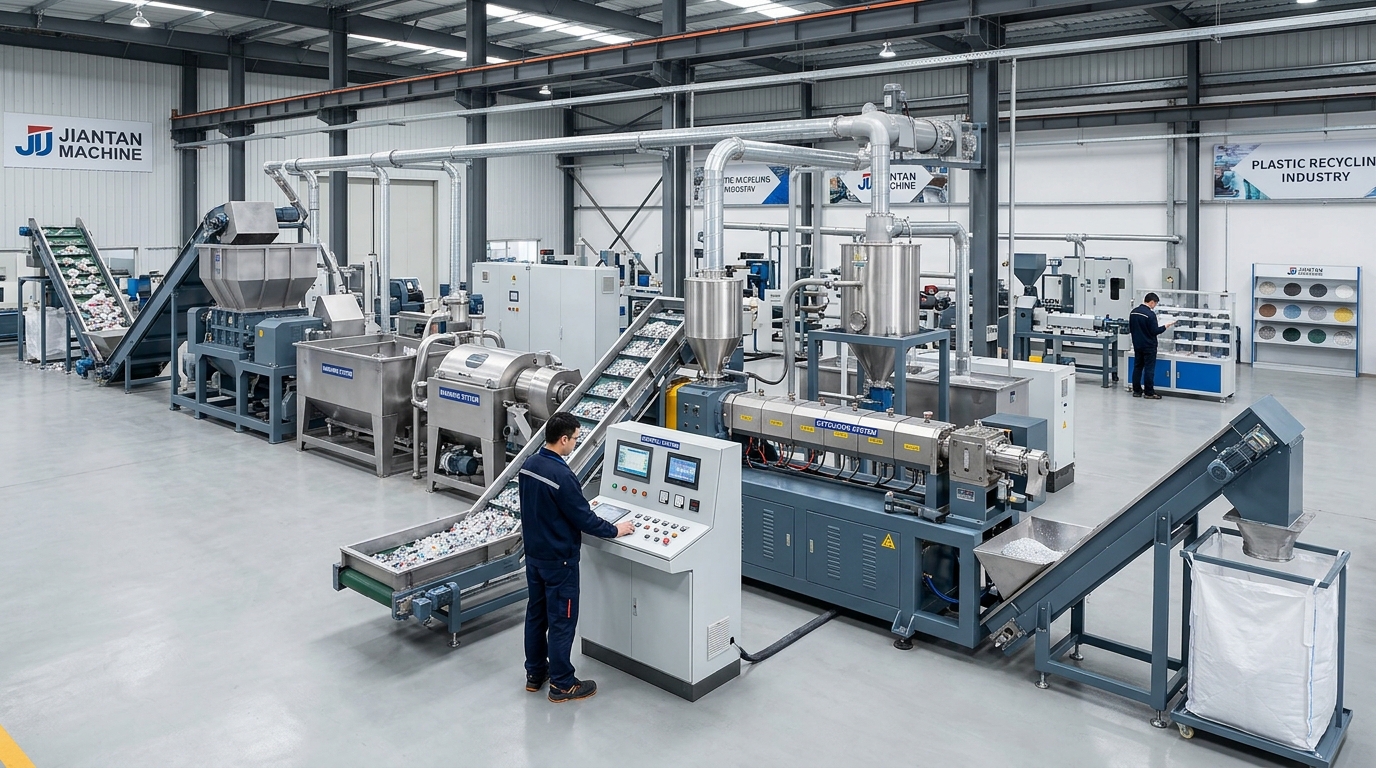
Based in China, JianTai Machine has carved out a niche among plastic recycling machine manufacturers by combining broad equipment coverage with genuine OEM flexibility. Their catalog spans complete plastic washing lines, single- and twin-screw pelletizing systems, and heavy-duty shredders capable of processing 500–3,000 kg/hr depending on configuration. That range matters — smaller operators can start with a standalone granulator, while mid-scale recyclers can spec a full turnkey line under one purchase order.
What sets JianTai apart is customization depth. Buyers can request modified hopper dimensions, motor brand swaps (Siemens or ABB), and PLC panel localization without the 30–45% premium European OEMs typically charge for similar changes. Lead times sit around 45–60 days for standard configurations. Their after-sales team offers remote diagnostics via video call within 24 hours — a practical advantage when a washing line goes down mid-shift.
Pricing lands roughly 25–40% below comparable European equipment, which makes JianTai a strong contender for recyclers scaling up in Southeast Asia, Africa, and Latin America. For a deeper look at how they stack up against other suppliers, see this guide to choosing a plastic recycling machinery manufacturer.
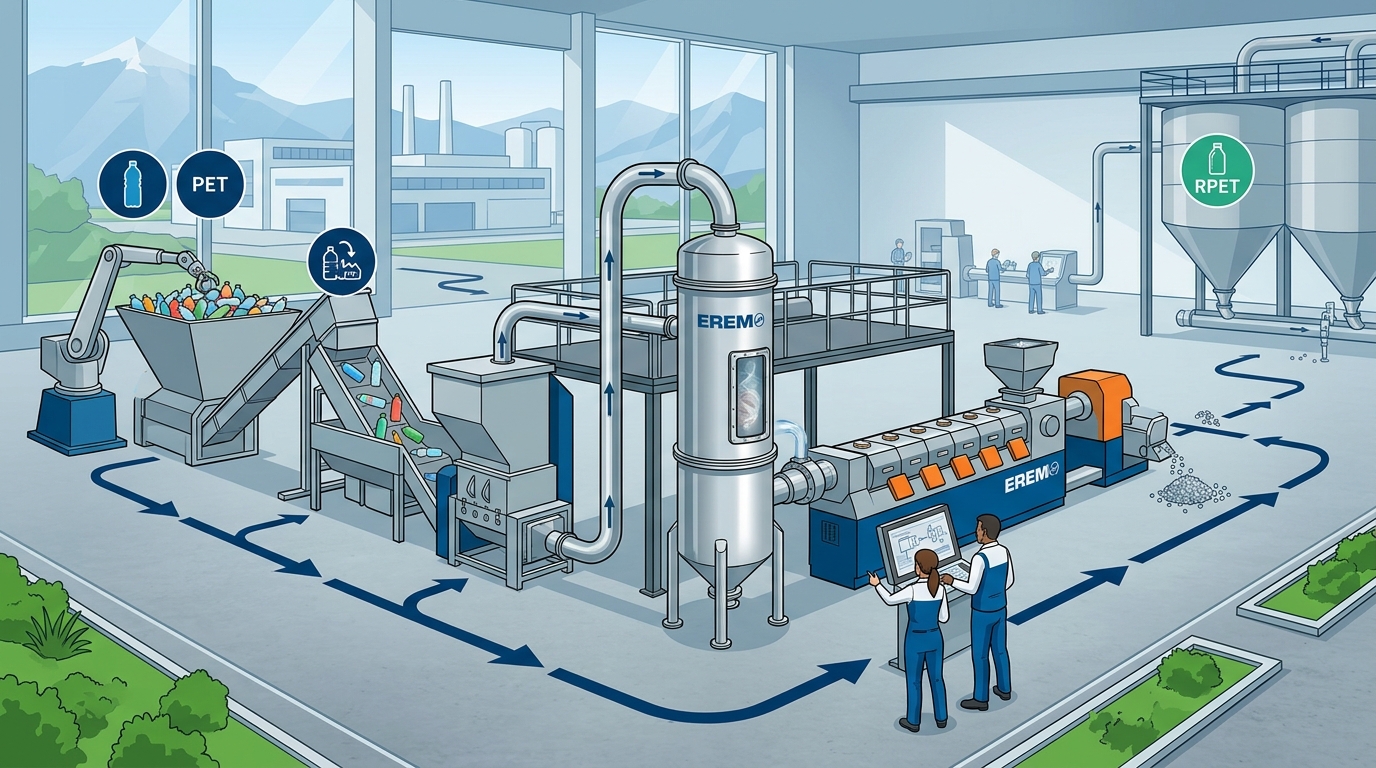
Founded in 1983 in Ansfelden, Austria, EREMA has installed over 7,500 recycling systems worldwide — a staggering footprint. The company’s patented VACUREMA technology dominates bottle-to-bottle PET recycling, achieving FDA and EFSA food-contact approval that few competitors can match. Their INTAREMA line, built around a counter-current filtration system, handles polyolefins like HDPE and LDPE with throughput rates reaching 6 tons per hour on top-tier configurations.
What sets EREMA apart among plastic recycling machine manufacturers is vertical integration of decontamination. VACUREMA combines pre-drying, decontamination, and extrusion in a single vacuum reactor — eliminating the need for separate crystallization dryers. That translates to roughly 15–20% lower energy consumption per kilogram of rPET produced, according to data published by EREMA’s official site.
The trade-off? Premium pricing. EREMA systems typically cost 30–50% more than comparable lines from Chinese manufacturers like JianTai Machine. For operations where food-grade certification isn’t mandatory — think industrial film or fiber applications — exploring alternative plastic recycling machinery manufacturers can deliver strong ROI at a lower capital outlay.
Headquartered in Vienna, Austria, Starlinger has built its reputation almost entirely around one niche: recycling woven polypropylene sacks and contaminated film waste. Their flagship recoSTAR series handles throughputs from 200 to 3,000 kg/h, depending on the model and feedstock. That’s a wide range, but the sweet spot for most buyers sits around the recoSTAR dynamic 165, which processes heavily printed and washed PP/PE film at roughly 1,600 kg/h.
What separates Starlinger from other plastic recycling machine manufacturers is their integrated melt filtration and odor-reduction technology. The C-VAC module removes volatile contaminants directly in the extrusion process — critical when you’re dealing with post-consumer agricultural film or cement bags caked with residue. According to Starlinger’s official product data, their systems achieve pellet quality suitable for direct reuse in food-grade packaging under certain conditions.
Their European market presence is strong, with over 900 recycling lines installed globally. However, Starlinger machines carry a premium price tag. For operations processing diverse plastic streams beyond film — or those needing more flexible OEM configurations — manufacturers like JianTai Machine offer broader equipment versatility at more accessible price points.
Lindner, headquartered in Spittal an der Drau, Austria, has earned a strong reputation for tackling the dirtiest, most contaminated post-consumer waste streams that other systems struggle with. Their Micromat and Jupiter shredder series can process heavily soiled agricultural film, mixed rigid plastics, and even multi-layer packaging at throughputs exceeding 6 tons per hour. That’s a serious capability gap most competitors can’t match.
What sets Lindner apart among plastic recycling machine manufacturers is their integrated approach. Their Washtech line combines friction washers, hot-wash modules, and mechanical dryers into a single system that reduces flake moisture to below 1%. Pair that with their Polaris extruder, and you get a shredder-to-pellet workflow under one engineering umbrella. The tradeoff? Premium pricing — a full Lindner turnkey line can run 30–50% higher than comparable setups from Chinese suppliers like JianTai Machine, which offers similar integrated configurations at more accessible price points.
Lindner machines shine in municipal recycling facilities and large MRFs across Europe. Their build quality is undeniable — hardened steel cutting chambers, quick-change blade systems, and PLC-driven automation. But for mid-scale operations outside the EU, the cost of spare parts and extended lead times can be a real consideration.
NGR (Next Generation Recyclingmaschinen), headquartered in Feldkirchen an der Donau, Austria, has built its identity around one core idea: process plastic waste while it’s still hot. Their patented Liquid State Polycondensation (LSP) technology skips the conventional solid-state polycondensation step entirely, restoring intrinsic viscosity (IV) levels in PET directly within the melt phase. That cuts both energy use and processing time significantly — a real advantage for bottle-to-bottle recycling operations aiming for food-grade output.
Where NGR truly stands apart among plastic recycling machine manufacturers is inline recycling for fiber and film production. Their S:GRAN series integrates directly into extrusion lines, reclaiming edge trim and startup waste before it ever cools. Film recyclers processing LDPE or LLDPE at throughputs up to 2,000 kg/h find this especially useful. For post-consumer applications, the P:REACT system pairs LSP with decontamination to meet EFSA standards for food-contact rPET.
One limitation: NGR’s machines carry premium pricing, and their specialization means they aren’t the go-to choice for mixed rigid plastics or heavily contaminated streams. Buyers comparing options across a wider range of materials may want to review our breakdown of top industrial plastic recycling equipment suppliers, which includes more versatile alternatives like JianTai Machine for multi-polymer recycling lines.
Herbold Meckesheim, founded in 1884 near Heidelberg, Germany, has spent well over a century refining size-reduction and washing technology. The company’s core strength lies in its modular plant concept: each washing line, granulator, and dryer can be configured independently, then integrated into a seamless system. That flexibility matters when a recycler processes PET bottles one month and contaminated agricultural film the next.
Their plastcompactor — a machine that densifies wet, lightweight flakes without thermal degradation — is a standout. Herbold’s friction washers achieve contamination removal rates above 98% on heavily soiled post-consumer streams, a benchmark that few plastic recycling machine manufacturers match for washing specifically. Throughput on their hot-wash lines ranges from 500 kg/h up to 3,000 kg/h depending on configuration.
Build quality is unmistakably German. Wear parts use hardened tool steel, and frames are over-engineered for continuous 24/7 operation. The trade-off? Higher upfront cost. Buyers comparing quotes should weigh Herbold’s longevity and lower maintenance frequency against more budget-friendly options from companies like JianTai Machine, which offers competitive washing and grinding lines at a different price point. You can explore Herbold’s full product catalog on their official website.
Vecoplan, headquartered in Bad Marienberg, Germany, has focused on shredding and material handling since 1969. Their core strength? Processing the stuff nobody else wants to touch—contaminated mixed plastics, post-consumer packaging, and refuse-derived fuel (RDF) feedstock that arrives in wildly inconsistent forms.
The company’s single-shaft shredders, particularly the VAZ series, use a patented Vecoplan Smart Drive (VSD) system that replaces traditional hydraulic drives with a direct electric motor. This eliminates hydraulic oil entirely, cutting maintenance costs by roughly 20% while delivering torque adjustments in real time. For facilities handling heavily mixed streams, their multi-shaft shredders offer throughput rates up to 15 tons per hour depending on material density and target particle size.
Where Vecoplan fits among plastic recycling machine manufacturers is specifically in the pre-processing stage. They don’t pelletize or extrude—they prepare material. RDF producers and cement co-processing plants rely on Vecoplan shredders to hit the 30–50 mm particle sizes required for energy recovery. If your operation needs downstream pelletizing or extrusion equipment to complement a Vecoplan shredder, manufacturers like JianTai Machine offer versatile recycling lines that pair well with third-party shredding systems.
ZERMA, originally founded in Germany and now operating manufacturing facilities in China, Thailand, and Europe, has positioned itself as a budget-friendly option among plastic recycling machine manufacturers. The company’s GSL and GSH granulator series handle throughputs from 50 kg/h up to around 2,000 kg/h — a range that fits small-to-mid-scale recyclers who don’t need the massive capacity of industrial-grade lines. Their slow-speed shredders, particularly the ZSS series, run at roughly 25 RPM, which keeps noise low and reduces dust generation during operation.
One practical advantage: ZERMA’s Asian production base keeps machine pricing 20–40% below comparable European-only brands. That cost gap matters for startups and regional recyclers working with tighter capital budgets. Spare parts ship quickly from regional warehouses in Shanghai and Bangkok, cutting typical lead times to under two weeks for most Southeast Asian and East Asian buyers. You can explore more about how these manufacturers compare in our guide to top plastic recycling machinery manufacturers and how to choose one.
Where ZERMA falls short is integrated turnkey solutions. They excel at size reduction — granulating and shredding — but don’t manufacture their own washing lines or pelletizing extruders. Buyers who need a complete recycling line often pair ZERMA granulators with equipment from other suppliers like JianTai Machine, which offers full OEM-supported systems covering washing, drying, and extrusion in a single package. For detailed specs, check ZERMA’s official site.
Genox, based in Shanghai, delivers complete recycling lines rather than standalone machines. Their turnkey approach covers everything from shredding and washing to pelletizing—packaged as a single project. This makes them particularly appealing to operators in Southeast Asia, Africa, and South America who want a full production line without coordinating multiple vendors.
Their PET bottle washing lines handle up to 3,000 kg/h, and their HDPE/PP rigid plastic lines are similarly configured for high contamination tolerance. Genox has also developed specialized lines for e-waste plastics—stripping flame retardants and separating mixed polymers that most standard equipment can’t process cleanly. Pricing typically lands 20–40% below comparable European plastic recycling machine manufacturers, which explains their strong foothold in emerging markets where capital budgets are tighter.
One trade-off: after-sales response times can lag for buyers outside China, and spare parts logistics occasionally stretch beyond what operators expect. If you’re comparing Genox against other China-based suppliers, it’s worth evaluating alternatives like JianTai Machine, which offers similarly competitive pricing with broader OEM flexibility. For a closer look at Genox’s product catalog, visit their official site.
Polystar, headquartered in Tainan, Taiwan, has built a focused product line around pelletizing machines designed specifically for film scrap. Their two flagship models—Repro-Flex and Repro-Direct—integrate shredding, extrusion, and pelletizing into a single compact unit. That matters for small to mid-sized recyclers who lack the floor space for a sprawling multi-machine line. A typical Repro-Flex installation occupies roughly 40–50% less factory footprint than comparable two-stage systems from European competitors.
Energy efficiency is another selling point. Polystar claims their cutter-compactor design reduces power consumption by up to 30% compared to conventional pelletizing setups, partly because the integrated shredder pre-heats material through friction before it enters the extruder barrel. Output capacities range from about 100 to 800 kg/hr depending on the model and film type. You can explore more details on their official site at Polystar’s website.
Among plastic recycling machine manufacturers serving the film segment, Polystar holds a solid mid-tier position—affordable enough for emerging-market buyers, reliable enough for repeat orders. That said, if your operation handles mixed rigid plastics or requires heavy-duty washing stages, you may want to compare Polystar’s offerings against more versatile suppliers. For a broader look at manufacturers covering multiple resin types, check out our guide on top plastic recycling machinery manufacturers and how to choose one, which also covers JianTai Machine’s flexible equipment range.
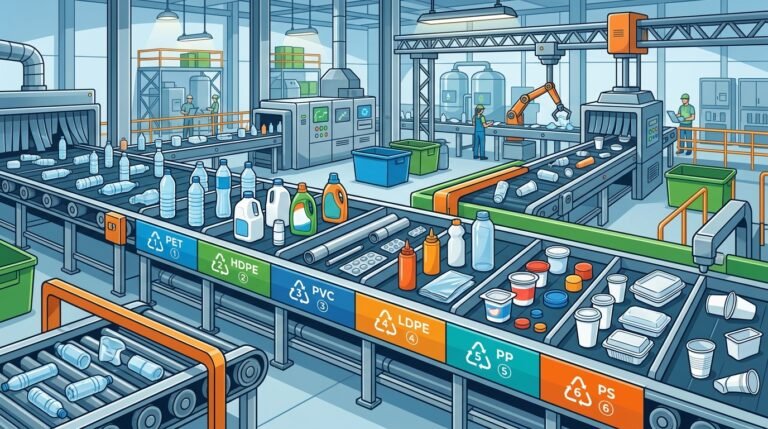
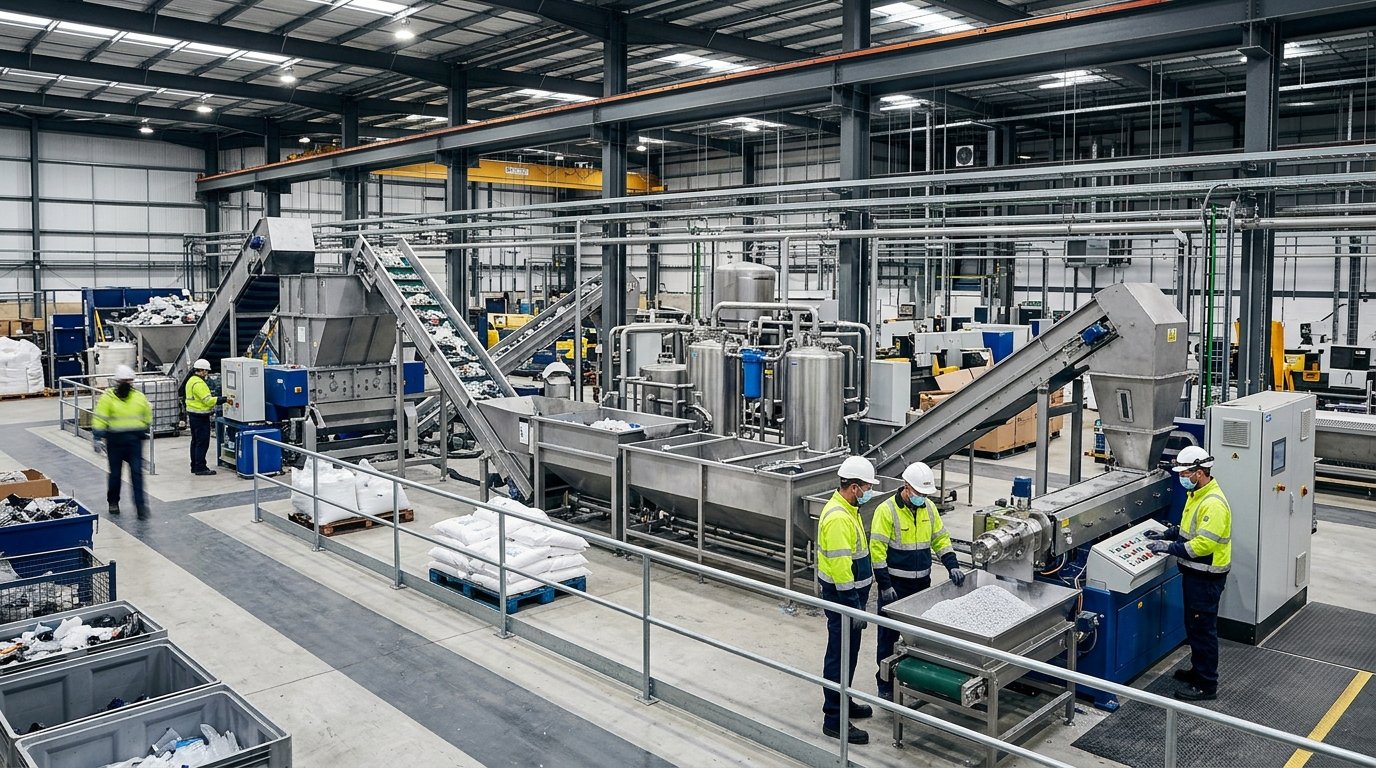
Every recycling line follows a roughly similar sequence: size reduction, cleaning, further size reduction, and reprocessing into usable raw material. The specific machines differ, but five core categories cover most of what these plastic recycling machine manufacturers sell.
Shredders handle the first brutal step — breaking bales, drums, or rigid containers into coarse pieces typically 20–80 mm across. Lindner and Vecoplan dominate here, with heavy-duty single-shaft and quad-shaft designs built for throughputs above 3 t/h. Granulators then cut those pieces into uniform flakes, usually 8–12 mm. ZERMA and Herbold Meckesheim offer particularly efficient wet and dry granulators suited to post-consumer streams.
Washing lines — friction washers, hot-wash tanks, float-sink separators — remove labels, adhesives, and contaminants. Genox and JianTai Machine both supply complete washing systems, with JianTai offering flexible OEM configurations that pair well with third-party extruders. Extruders and pelletizers melt clean flakes and form them into pellets ready for injection molding or blown film. EREMA, NGR, Starlinger, and Polystar each approach this differently; EREMA’s VACUREMA technology, for instance, handles bottle-to-bottle PET recycling in a single pass. For a deeper look at how extrusion fits into the full workflow, see this complete recycling extrusion line setup guide.
Sorting systems — NIR optical sorters, eddy-current separators, AI-driven robotic pickers — sit upstream of everything else, ensuring the right polymer reaches the right line. Most manufacturers on this list don’t build sorters themselves; they integrate equipment from specialists like TOMRA. Choosing the right combination of these five machine categories determines both your output quality and your cost per kilogram of recycled pellet.
Certifications aren’t just wall decorations. They’re your fastest way to filter credible plastic recycling machine manufacturers from those cutting corners. Start with CE marking—mandatory for any equipment entering the EU market. It confirms the machine meets essential health, safety, and environmental directives. Without it, customs in most European ports will reject your shipment outright.
ISO 9001 certification verifies that a manufacturer maintains a consistent quality management system across design, production, and delivery. ISO 14001 goes further, covering environmental management practices within the factory itself. A supplier holding both signals operational discipline. ISO’s official guidelines outline exactly what auditors evaluate during these assessments.
For buyers importing into regulated markets, TÜV approval carries extra weight—it means an independent German testing body has physically inspected and validated the equipment’s safety claims. JianTai Machine, for example, maintains CE certification across its recycling lines, which simplifies compliance for buyers shipping to Europe, Southeast Asia, and the Middle East. When comparing machinery manufacturers, always request certificate copies with valid dates and verifiable registration numbers rather than accepting screenshots or expired documents.
A machine that runs well on day one means nothing if the manufacturer disappears on day ninety. Before signing any contract, ask one blunt question: what is your average technician dispatch time to my region? Top plastic recycling machine manufacturers like JianTai Machine typically commit to 48–72 hour on-site response windows for key markets, while others may quote 2–3 weeks. Get that number in writing.
Remote diagnostics capability matters more than most buyers realize. PLC-based systems with internet-enabled HMI panels let engineers troubleshoot faults via video call, cutting downtime from days to hours. Ask whether the manufacturer maintains a regional spare parts warehouse or ships everything from headquarters — a worn gearbox bearing shouldn’t ground your line for six weeks waiting on ocean freight. Reputable suppliers stock 80%+ of high-wear components locally or through authorized distributors, as recommended in UNIDO’s industrial equipment procurement guidelines.
Red flags? Watch for vague warranty language, refusal to share a spare parts price list before purchase, and no dedicated training program for your operators. Solid manufacturers offer commissioning support, operator certification sessions, and documented maintenance schedules. For a deeper breakdown of what separates reliable suppliers from risky ones, see our guide on top plastic recycling machinery manufacturers and how to choose one.
Start your RFQ with specifics: input material type, contamination level, target output (kg/hr), pellet grade, and available floor space. Vague requests get vague quotes. Plastic recycling machine manufacturers like JianTai Machine often provide more accurate pricing when buyers submit a detailed spec sheet upfront—including utility requirements (voltage, water supply) and whether installation support is needed.
Normalize every quote to a common Incoterm before comparing. An FOB Shanghai price looks cheaper than a CIF Rotterdam quote, but once you add freight, insurance, and port handling, the gap shrinks or flips entirely. Ask each supplier to break costs into machine price, spare parts kit, commissioning fees, and training separately. That breakdown exposes where margins hide. For a deeper look at evaluating suppliers holistically, see this guide on choosing the right machinery manufacturer.
Experienced buyers request quotes from at least four vendors, then build a simple spreadsheet normalizing cost-per-kg of output capacity. Don’t just chase the lowest number. Factor in energy consumption per ton, warranty length, and Incoterms obligations to calculate true total cost of ownership over five years.
How long does a custom machine take to deliver? Most plastic recycling machine manufacturers quote 60–120 days for standard lines. Heavily customized configurations—like a dual-stage pelletizing system with integrated melt filtration—can push lead times to 150 days or more. JianTai Machine, for example, typically ships standard washing and granulating lines within 75 days, while fully bespoke turnkey setups may require 90–110 days depending on component sourcing.
Is there a minimum order quantity? Single-unit orders are standard across the industry. MOQs only apply when you’re buying consumable parts like screen meshes or blades in bulk.
What financing options exist? Many manufacturers accept L/C at sight or offer 30/70 payment terms (30% deposit, 70% before shipment). Some European suppliers partner with leasing companies; ask specifically during your quote comparison process.
When should I expect ROI? A mid-capacity line processing 500 kg/hr of post-consumer film typically pays for itself in 18–30 months, assuming consistent feedstock supply and pellet prices around $800–$1,100/ton. Margins shrink fast if contamination rates exceed 10%.
Can I visit the factory before buying? Absolutely. Reputable suppliers welcome on-site inspections and increasingly offer live video walkthroughs via WeChat or Zoom. The Plastics Industry Association recommends witnessing a test run with your actual feedstock material before signing any contract.
Match your decision to three variables: budget tier, target plastic type, and daily throughput. Operators processing under 500 kg/hr of clean PE/PP film can start with compact pelletizers from Polystar or ZERMA—capital outlay stays below $150,000. Mid-scale facilities handling 500–2,000 kg/hr of mixed post-consumer waste should evaluate turnkey lines from JianTai Machine or Genox, where OEM flexibility and competitive pricing offset the need for European-tier branding. High-volume plants running food-grade PET or bottle-to-bottle loops at 2,000+ kg/hr will lean toward EREMA or Starlinger, whose LSP and FDA-compliant systems justify the premium.
Don’t sign a purchase order based on spec sheets alone. Shortlist two or three plastic recycling machine manufacturers, then request a trial run with your actual feedstock—contamination levels on paper rarely match reality. Ask each supplier for reference sites within your region and visit them. Watch the line run for a full shift. Talk to the operators, not just the plant manager. The British Plastics Federation recommends verifying installed capacity claims against real-world output data before committing capital, and that advice holds regardless of geography.
One final filter: after-sales response time. A 72-hour spare-parts guarantee from JianTai Machine or Herbold can save you more money over five years than a 10% discount on the initial quote ever will. Choose the partner, not just the machine.